
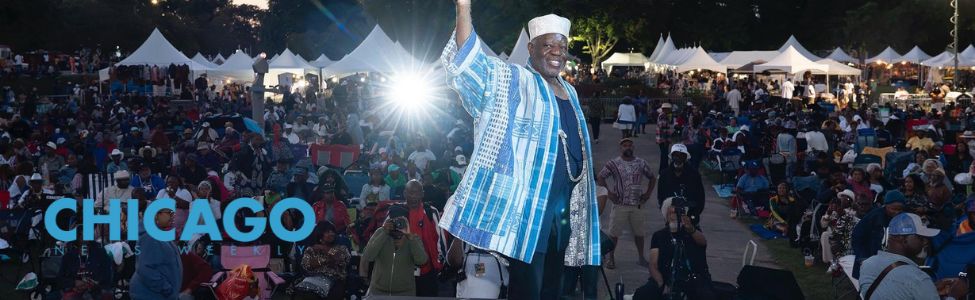
CHICAGO: Before the African Festival of the Arts stretched across Washington Park, before the stages, food, fashion, paintings and thousands of people moving through an open-air marketplace, there was a small shop in Hyde Park called Window to Africa.
Owned by Dr. Delores Dee Parmer Woodtor and Patrick Woodtor, the Harper Court art and gift store became more than a place to purchase African objects. Exhibitions, fairs and fashion shows drew crowds, creating a gathering point around the art, traditions and cultures of the continent. According to Africa International House USA Inc., the activity surrounding Window to Africa eventually grew large enough that, in 1989, a group of cultural supporters came together to manage its programming. Those activities became the African Festival of the Arts.
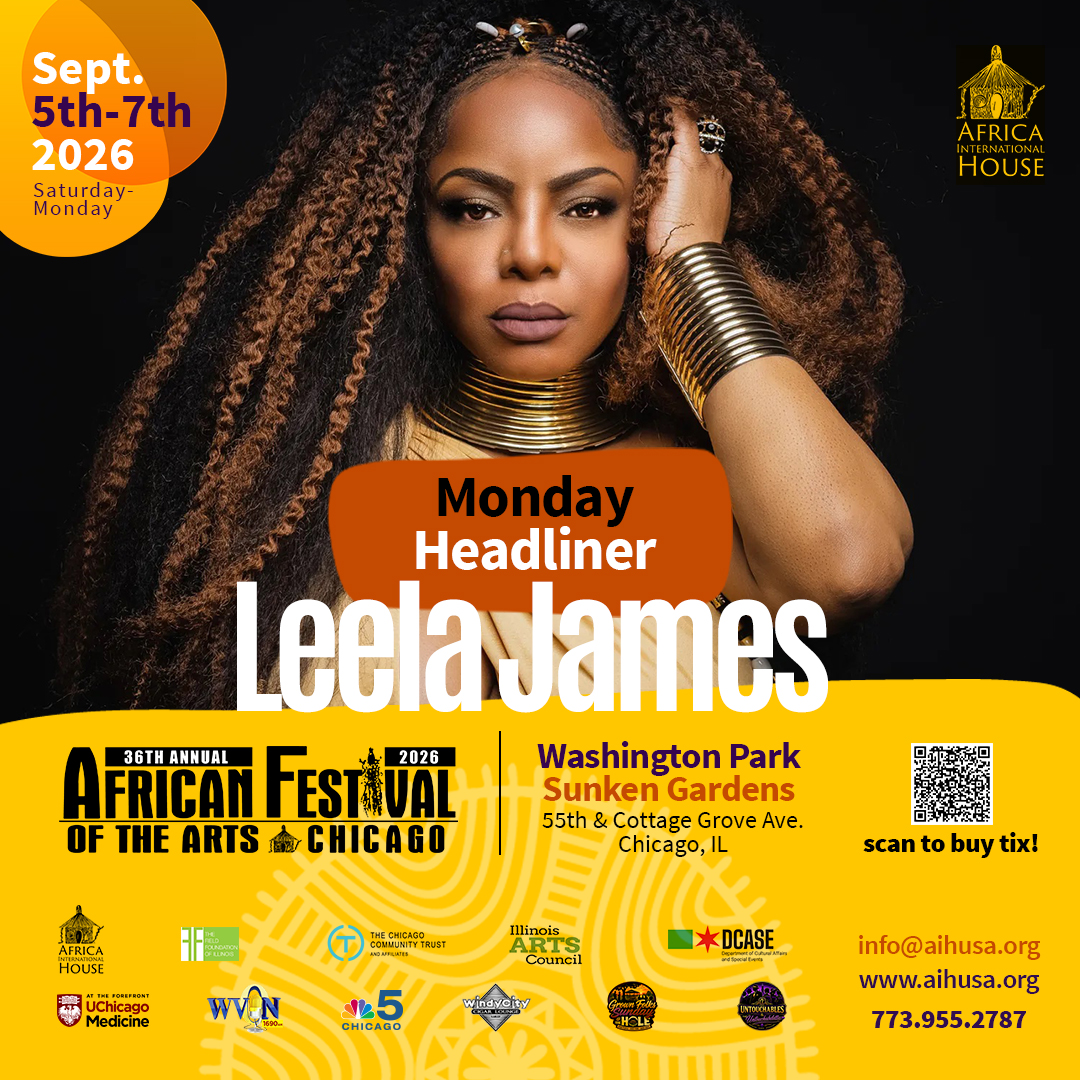
Now marking its 36th annual gathering, African Fest returns to Washington Parks Sunken Garden Sept. 5-7 for three days of visual art, music, fashion, food, literature and cultural programming. Presented by Africa International House, this years theme, Crowning the African Spirit, carries an idea that has been present from the beginning: creating a place where Africa and its diaspora can meet through culture. Gates will be open from 10 a.m. to 10 p.m. each day.
The scale has changed considerably since the days of that Hyde Park storefront. The central idea has not.
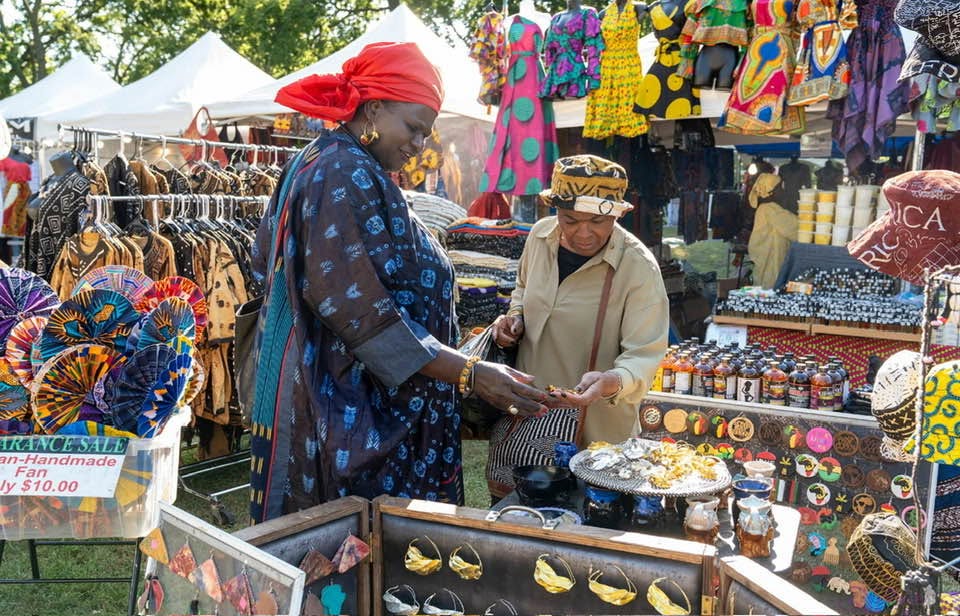
At African Fest, culture is not confined to a gallery wall or explained solely through history. It is worn in the clothing, worked into sculpture and jewelry, painted across canvases and carried through drumming and dance. It fills plates, books, conversations and eventually the main stage. For more than three decades, the festival has created a space where culture can be observed, but more importantly, experienced.

From a Storefront to an Institution
The origins of the festival are inseparable from the Woodtors.
Patrick Woodtor came to the United States from Liberia in 1976 to attend Northwestern University, where he met Dee. The couple later lived in Liberia before returning to Chicago amid political turmoil there. A 2022 congressional tribute honoring the Woodtors described Window to Africa as both a cultural resource for the surrounding Black community and a place that helped African immigrants adjust to life in the United States.
Dees work extended beyond the store. She became the author of Finding a Place Called Home: A Guide to African-American Genealogy and Historical Identity, a book devoted to helping Black Americans research family history and ancestry.
Together, the Woodtors were building connections from two directions: between the continent and Chicago, and between African Americans and histories that could sometimes feel distant or difficult to recover.
Window to Africa became a physical meeting place for those connections. Africa International Houses own history lists artists and cultural figures including Joanne Scott, Shionah Chancellor, Steven B. Jackson, Dayo Laoye, Gwen Luster and Curtis Chancellor among those who helped operate the space. Its programming became ambitious enough to bring the Bahamas National Dance Troupe to Chicago for a local premiere.
The shop eventually disappeared. The gathering it helped create did not.
Where Culture Meets Commerce
Part of African Fests staying power can be found in the way it has treated art not simply as something to admire, but as something capable of creating an economy.
The festival marketplace has long placed painters, sculptors, fashion designers, craftspeople and other entrepreneurs directly in front of audiences. That relationship between culture and commerce has been especially important for Black artists seeking collectors and customers outside traditional gallery systems.
Painter Dayo Laoye provides perhaps the clearest bridge between African Fests beginnings and its present.
Laoye was among the people involved with Window to Africa in its early years. Decades later, he remains part of African Fest. In a 2022 interview with CBS Chicago, the Nigerian-born artist said the festival helped expand the market for Black artists and allowed him to build his own clientele after coming to the United States.
He returns again in 2026.
This years marketplace will include Laoye and painter Frank Frazier, along with designers Jimi King and Dana Easter. Internationally acclaimed sculptor Woodrow Nash will serve as the featured artist, returning to African Fest for the first time since 2019. Organizers say visitors will find contemporary, traditional and folk art alongside work from emerging artists and designers representing Africa and the global African diaspora.
That mixture of familiar and emerging names says something important about a festival entering its fourth decade. Continuity does not require remaining unchanged. It requires creating enough room for the people who built a space to return while allowing somebody new to enter it.
A Diaspora in Sound
The same breadth appears in this years music lineup.
Detroit hip-hop group Slum Village will perform Saturday, Sept. 5. Sunday shifts toward gospel with Shirley Caesar, one of the genres most enduring voices, while R&B singer-songwriter Leela James will close the festival Monday.
The artists occupy dramatically different musical worlds, but that distinction fits African Fest.
African diasporic culture does not produce one sound, one aesthetic or one experience. Hip-hop, gospel, R&B, jazz, dance, spoken word and music rooted more directly in traditions from the continent carry different histories while existing within a larger cultural conversation. African Fest has made space for those differences to sit beside one another.
Beyond the main stage, festivalgoers can expect cuisine from across the African world, childrens activities, wellness programming, literary presentations, cultural demonstrations, drumming, dance workshops and opportunities to engage with artists, scholars and entrepreneurs.
For first-time visitors, the sheer range of the festival may be what stands out. For those who have attended for years, there is another layer. Artists return. Vendors recognize customers. Families make the festival part of the rhythm of Labor Day weekend, and children who first experienced African Fest beside their parents eventually have the opportunity to introduce it to another generation.
That is where describing African Fest simply as an arts festival begins to feel incomplete.
Still Building
Like many long-running cultural institutions, African Fest has had to evolve. The pandemic interrupted the in-person gathering, and rising production costs led organizers to cancel the 2024 festival before it returned to Washington Park last year.
Its return matters, but not simply because an event came back to the calendar.
Africa International House describes its larger purpose as connecting people from Africa and the African diaspora while exposing audiences to the individual and collective contributions of African cultures. The festival remains the organizations most visible expression of that mission.
In 2026, that expression looks both familiar and expansive.
Some of the people connected to the earliest years of Window to Africa can still be found in the marketplace. They will stand beside artists who had not yet begun their careers when the first festival was held. Musicians whose work emerges from different generations and corners of Black culture will share the weekend. Entrepreneurs will meet customers, artists will meet collectors and families will move through a space where the connection between Chicago and the wider African world becomes unusually tangible.
What began around a Hyde Park storefront has become a gallery, marketplace, classroom, concert and gathering place spread across Washington Park.
That may be the most important thing African Fest has built.
Not simply a festival, but enough space for a culture, a marketplace and generations of people to keep meeting one another there.