
It started as a gathering and became something larger. By 1 p.m. on Friday, May 1, several separate morning protests had converged into a sea of homemade signs and rippling banners at Union Park, 1501 W. Randolph St. What followed was one of the most heavily attended May Day demonstrations Chicago has seen in recent memory thousands strong, stretching from the Near West Side all the way to Daley Plaza downtown, where marchers finally arrived just after 4 p.m.
The timing carried particular weight this year. May Day 2026 marked the 140th anniversary of the labor uprising that began right here in Chicago and gave birth to International Workers' Day as it is observed around the world. On May 1, 1886, tens of thousands of Chicago workers walked off the job and took to the streets demanding an eight-hour workday the largest such demonstration in the country. Days later, on May 4, a bomb thrown at police during a rally at Haymarket Square set off one of the most consequential events in American labor history. In the years that followed, the international labor movement designated May 1 as International Workers' Day in honor of those who had fought and died in Chicago that week.
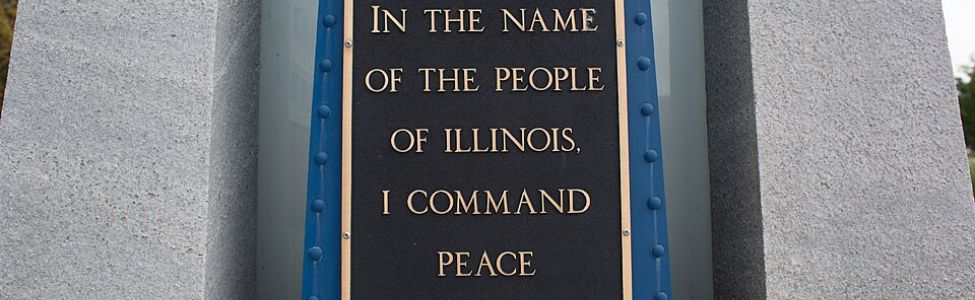
To mark the 140th anniversary, city officials and labor leaders gathered Friday morning at the Haymarket Memorial, 151 N. Des Plaines Ave., to unveil a new plaque. Mayor Brandon Johnson, Illinois Secretary of State Alexi Giannoulias, and UAW President Shawn Fain were among those present for the dedication.
"This clash gave birth to the International Workers' Day we observe today," said Rabbi Daniel Kirzane of KAM Isaiah Israel in Hyde Park, who addressed the noon interfaith service at Union Park. "And inspired labor activists to redouble their efforts to protect the lives and livelihoods of everyday people." (Source: WTTW Chicago news.wttw.com)
The march itself stepped off shortly before 2:30 p.m., moving along Washington, Racine, Jackson, Halsted, and Washington streets before reaching Daley Plaza. The crowd carried flags and signs on a wide range of grievances ICE's targeting of Chicago neighborhoods, wealth inequality, workers' rights, and calls for justice for Silverio Villegas González, who was shot and killed by a federal immigration enforcement officer in suburban Franklin Park in September 2025. Mayor Johnson joined marchers near Union Park and helped lead the procession downtown.
The rally's demands were organized under the national "Workers Over Billionaires" banner a coalition of hundreds of groups across the country calling for a day of economic blackout: no work, no school, no shopping. At its core, the Chicago event reflected a city grappling with the compounding pressures of the Trump administration's immigration enforcement, widening economic inequality, and a labor movement that organizers say is more energized than it has been in a generation.
"You have to look at the actions that the Trump administration has taken over the last year and the impact on working people to understand where this urgency comes from," said Sharmili Majmudar of Chicago-based nonprofit Women Employed, who took the day off to join the march. (Source: Block Club Chicago blockclubchicago.org)
The Chicago Teachers Union was among the primary organizers, and the question of CPS participation generated its own drama in the days leading up to May 1. The CTU lobbied new CPS CEO Macquline King to close schools for the day, arguing the "day of action" was included in the union's contract. King declined, opting to keep schools open while allowing teachers to request time off and principals to organize supervised field trips. The district ultimately approved approximately 40 field trips for around 2,200 students, deploying more than 2,600 substitute teachers across 76 schools.
CTU President Stacy Davis Gates made a brief appearance at the rally. So did Mayor Johnson, who addressed the crowd before the march. "Today you're making history part of the next generation of voices and leaders who will continue on the legacy of protecting and building our democracy," Johnson said. (Source: ABC7 Chicago abc7chicago.com)
For many older Chicagoans who turned out Friday, the march was a return to something familiar. Queen Weiner, a retired CTU member, said she came to fight back against billionaires who she believes have "annihilated" the working class. Seeing the number of young people and students present gave her hope. "The fight never stops," she said. (Source: WTTW Chicago news.wttw.com)