
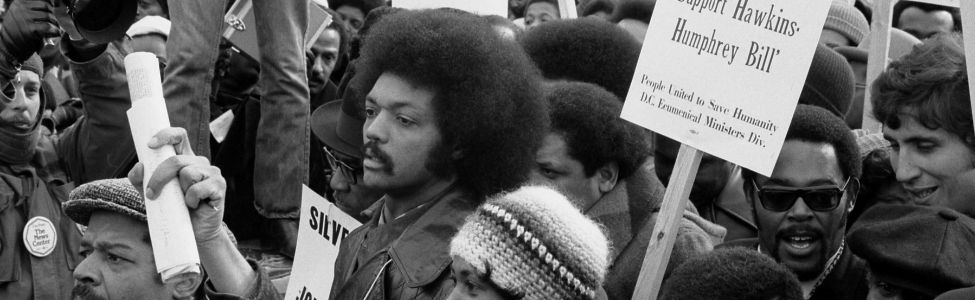
The Rev. Jesse Louis Jackson, the civil rights leader, presidential candidate and founder of the Rainbow PUSH Coalition, husband, father, son and most importantly, a change agent who was and architect of change that help advance mankinddied Tuesday morning, Feb. 17, 2026. He was 84.
For more than six decades, Jackson was one of the most visible and persistent voices in American public life — a preacher who marched beside Martin Luther King Jr., a political insurgent who reshaped the Democratic Party, and an economic activist who forced corporations, media companies and sports leagues to confront their records on race and inclusion. Perhaps most importantly is his work as a change agent who transformed the lives of people through the tenacity of effort and hope gifting us all with the contributions of the advancements he made happen.
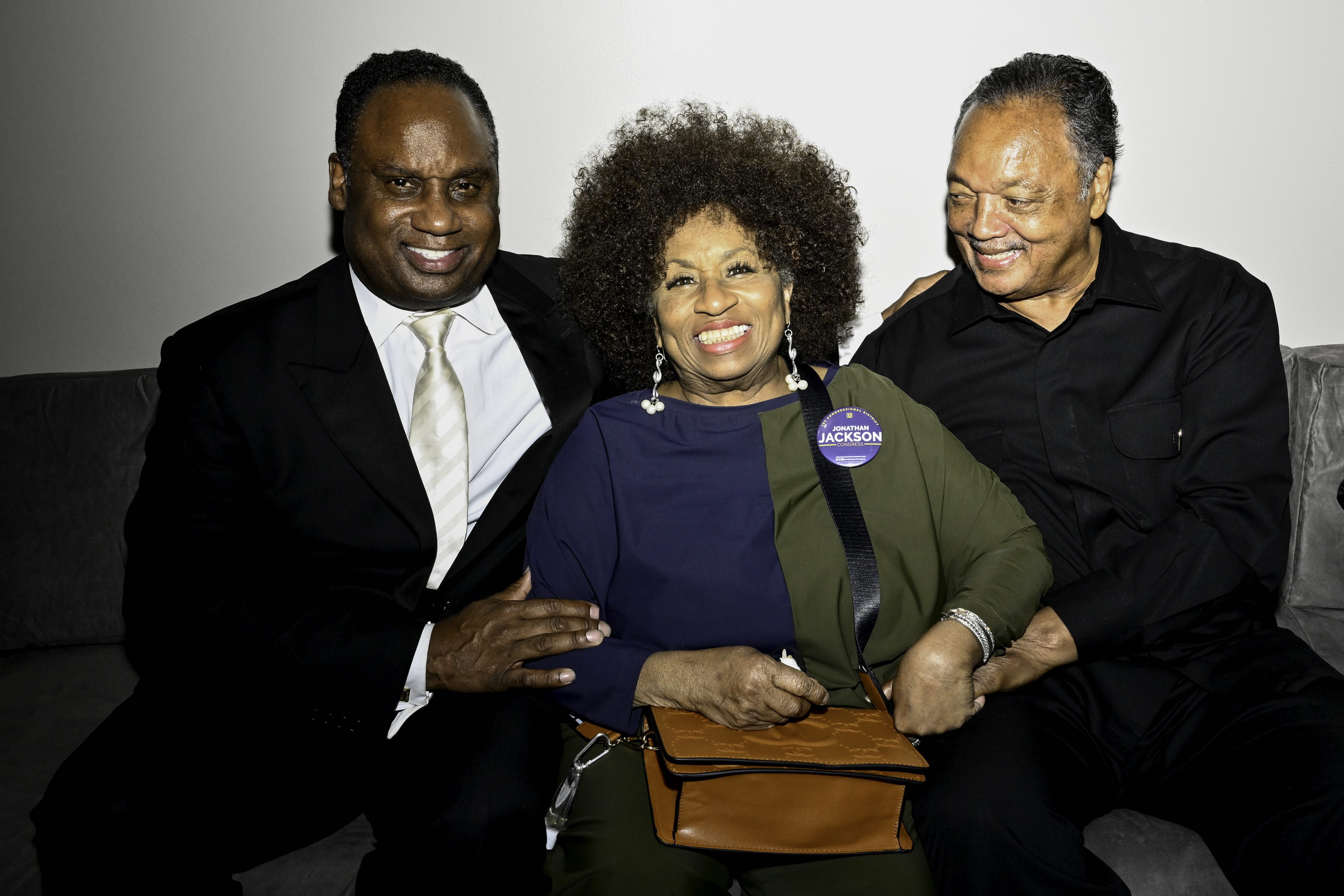
With his vision in mind and a firm foundation based on principles grounded in the humanity, that civilized people profess to value, Rev. Jackson set out to make that respect for all people a reality reminding them as often as he could with his rallying cries — “I Am Somebody” and “Keep Hope Alive” which became more than slogans. They were affirmations aimed at people pushed to the margins of American life, reminders that dignity and opportunity were rights, not privileges.
Most people know him as one of the ‘Civil Rights’ leaders who was on the balcony in Memphis when tragedy struck...Since that pivotal moment, Rev Jackson has been, 'That Somebody’ on a mission.
From Segregated Greenville to the National Stage
Jesse Louis Jackson was born Oct. 8, 1941, in Greenville, South Carolina, and raised in the rigidly segregated South. He often recalled sitting at the back of buses with his mother and attending under-resourced Black schools. “There was no grass in the yard,” he once said of his elementary school. “I couldn’t play.”
He excelled academically and athletically, earning a football scholarship to the University of Illinois before transferring to North Carolina A&T State University, then known as Agricultural and Technical College of North Carolina. There he studied sociology, became active in the burgeoning civil rights movement, and met Jacqueline Lavinia Brown. They married in 1962 and welcomed children, Jesse Jackson Jr., Santita Jackson Jonathan Jackson, Yusef DuBois Jackson, Jacqueline "Jackie" Lavinia Jackson and Ashley Jackson.
After graduating in 1964, Jackson joined the Southern Christian Leadership Conference (SCLC) in 1965, working under King. In 1966 the young Jackson moved his family to Chicago where he pursued graduate work at the Chicago Theological Seminary.
On April 4, 1968, he was in Memphis on the balcony when King was assassinated at age 39. Jackson, then 24, would later say, “we could not allow one bullet to stop the movement.”
King’s death marked a turning point, but not an end. Jackson emerged from that tragedy determined to continue the struggle. If we accept that things happen as they should, then note that Jackson’s resignation from SCLC in 1971 led him to create Operation PUSH (People United to Save Humanity) based in Chicago. In 1984, he established the National Rainbow Coalition, whose mission was to establish equal rights for African Americans, women and all people. The two organizations merged in 1996 to form the Rainbow PUSH Coalition.
As Rev Jackson’s popularity expanded, his political engagement began to span the world, often mediating issues and disputes with leaders in foreign countries. South Africa was on his route in 1979 to speak-out against apartheid policiesand that led to his visits to the Middle East influencing the creation of a Palestinian state. He also got behind democratic efforts in Haiti.
In 1984 Jackson threw his hat in the U.S. Presidential race as the second Black to do so after Shirley Chisholm. It was a historic success placing third in the Democratic primary and garnered a total of 3.5 million votes surpassing Chisholm's success.
It was 1988, when Jackson made his second presidential run, finishing second in the Democratic primaries Jackson delivered one of the most historically riveting speeches demonstrating hisoratory skills and populist vision winning more than 7 million votes. It’s interesting to note that Donald Trump supported Jackson monetarily during Jackson's 1984 and 1988 presidential campaigns. Jackson noted in 1999 that Trump had attended business meetings for these campaigns out of a "will to make things better."

Ten years later in keeping with his international influence, Jackson negotiated the release of three U.S. service members, citizens, U.S. Army soldiers who were held for 32 days while on a peacekeeping mission while in Yugoslavia.
The proportional representation system that Jackson fought for became the bedrock of Obama’s primary strategy 20 years later. Reverend Jesse Jackson's two presidential campaigns fundamentally restructured the Democratic Party’s nominating process shifting it from a "winner-take-all" system to one based on proportional representation. These reforms were designed to ensure that the impact of outsider and minority candidates was not minimized, ultimately fostering a more diverse and inclusive party base. This was a huge win for all future candidates.
In 1990 Rev Jackson secured his first election for one of two special unpaid, “statehood senator” posts created by the Washington city Council in order to lobby the U.S. Congress for statehood for the District of Columbia and closed out his potential political career. Years later he’d witness his sons Jesse Jr and Jonathan both become Illinois State Congressmen.
Politics Outside the Political Arena
Rev. Jesse Jackson has profoundly shaped the corporate world by transforming civil rights advocacy into a movement for economic empowerment and structural diversity. His impact is characterized by moving beyond simple hiring to demanding institutional equity in boardrooms and supply chains. He impacted the non-profit sector as well as the corporate world to expand the inclusion of Blacks in top job levels.
Jackson was honored with the Presidential Medal of Freedom awarded to him in 2000 by President Bill Clinton. That same year he received A Master of Divinity from the Chicago TheologicalSeminary.
Most of the programs and negotiations that Rev Jackson led and participated parlayed financial transformation for those disproportionately disadvantaged.
Operation Breadbasket and Economic Boycotts
In the late 1960s, Jackson led Operation Breadbasket in Chicago, using the "selective buying" power of Black consumers to force white-owned businesses to open private sector jobs to Black workers; to utilize Black vendors and professional services. He secured thousands of jobs through high-profile boycotts of companies like Anheuser-Busch and Coca-Cola.
The Wall Street Project
Launched in 1996, the Wall Street Project shifted the focus to the financial heart of corporate America. Its key achievements include:
The Trump Factor
Donated Office Space: In 1997, Trump provided Rainbow PUSH Coalition with free office spaces at 40 Wall Street. The donation was intended to give the project a permanent presence in the Financial District to monitor corporate hiring practices.
Jackson praised Trump in the 1990s for supporting minority entrepreneurs, but became a sharp critic during Trump’s political rise, warning that his rhetoric “seeded these clouds” of division and fear.
PUSH Excel and Talent Pipelines
PUSH Excel founded in 1975, focused on preparing African American students for corporate success. By emphasizing academic excellence and job readiness, Jackson worked to ensure that the "doors of opportunity" he forced open would be filled.
The "Fairness in Media" Strategy
In 1994, Jackson formed the Rainbow Coalition Commission on Fairness in the Media. He argued that the lack of minorities in decision-making roles led to "institutional racism" and skewed depictions of African Americans in news and entertainment.
High-Profile Network Confrontations
Jackson targeted individual networks and their local affiliates to create "covenants" or pledges for reform:
The 1999-2000 Industry Pacts
The peak of his impact came during a joint effort with the NAACP when Jackson pressured the "Big Four" (ABC, CBS, NBC, and Fox) to sign unprecedented diversity agreements. These pacts included:
Modern Broadcast Advocacy
In more recent years, Jackson used the regulatory process to influence management diversity. For instance, in 2022, his Rainbow PUSH Coalition intervened in the proposed purchase of Tegna to ensure the new ownership would maintainrigorous diversity and inclusion standards.
Jackson’s ‘diversity pacts’ changed the makeup of corporate boards outside of the media industry. He did not mince words when confronting television networks and their executives. In 1994 he accused the networks of racism specifically pointing to NBC’s hiring bias and insisted that what ‘the three networks must do, is hire more Blacks for management and on-air positions and the services of Black professionals and talent.’ Though, the officials denied that racism influenced their decisions they acknowledged that more could be done to increase cultural diversity in television representation across the board.
In the context of Rev. Jesse Jackson’s negotiations and the broader movement for diversity in Chicago media, he achieved the Landmark Appointment of Jonathan Rodgers.
In 1986, following a high-profile boycott sparked by the demotion of Black anchor Harry Porterfield, CBS hired Jonathan Rodgers as the first African American Vice President and General Manager of WBBM-TV Channel 2 rather than NBC, elevating him to the highest executive at a station, for a network-owned station in Chicago. Consequently, his hiring andsubsequentmiddle-management roles were the direct result of the intense pressure and boycott led by Jackson's Operation PUSH.
NBC (WMAQ-TV) Context
While Rodgers broke the barrier at CBS, Jackson’s influence at NBC (WMAQ-TV) also led to historic "firsts" in newsroom leadership and investigative roles:
Reverend Jackson galvanized Black power
By harnessing the Chicago Trio, Jackson shaped Media, Money and Diplomacy as a network of relationships. The union of Rev. Jesse Jackson, media figure Oprah Winfrey and athlete Michael Jordan helped elevate Chicago as a national center of Black influence, observers and contemporary accounts say.
Locally, the “Chicago nexus” combined Jackson’s activism, Winfrey’s rise through WLS-TV and Jordan’s global stardom to boost the city’s profile and economic clout for Black residents. Jackson’s campaigns — including boycotts and calls for “fairness in media” — pressured networks and advertisers to expand opportunities for Black talent, shifting the media landscape in ways that benefited Black journalists and broadcasters.
It would be blasphemous to fail to mention the Black Press, specifically members of the NNPA, which played a central role in reporting Jackson’s work, consistently covering his initiatives and informing Black communities. The silent partnership between the two allowed Jackson to control his narrative and help put him in the room where Jackson also urged corporations to allocate advertising dollars to Black newspapers, supplying audience figures to justify the investment — a deliberate strategy to strengthen the financial base of Black journalism.
Analysts say the combination of media influence, economic advocacy and high-profile diplomacy helped cement Chicago’s reputation as a hub of Black excellence and civic power.
In the Sports Arena
Rev. Jesse Jackson’s impact on sports was built on the philosophy that "equality on the field should parallel equality in management and ownership." Jackson felt strongly that ‘With a 70 percent Black NFL team, it is only fair for African Americans to be given top level management jobs, legal contracts, and scholarships “for our children.” He used his advocacy to challenge leagues to treat the "business of sports" with the Rooney Rule.
Influencing the NFL "Rooney Rule"
Rev. Jackson is credited with "igniting" the Rooney family (Pittsburgh Steelers ) to implement the Rooney Rule in 2003.
Rainbow PUSH Sports & Industry Diversity
In 1999, Jackson formally founded Rainbow PUSH Sports to move the focus from the "playing field" to the "front office."
Front Office "Report Cards"
This captures his genius at its best. Jackson applied his "Wall Street Project" tactics to sports, conducting studies that exposed the "serious deficiencies" in front-office hiring. They never saw him coming the way he did. The facts were there the reality spoke its truth.
Media & Broadcaster Management
Jackson’s broader "Fairness in Media" negotiations directly impacted sports television:
By pressuring icons like Ozzie Newsome (NFL's first Black GM) and Frank Robinson (MLB's first Black manager), Jackson helped create the "proof of concept" that African Americans could lead sports organizations at the highest levels.
Rev. Jesse Jackson and Rainbow PUSH Sports have worked for decades to increase diversity in the leadership of the sports industry; advocating for Blacks to be inside executive suites and ownership roles. The organization focuses on the "Business of Sports," "SportsTech," and "Social Justice" to prepare athletes for success beyond their playing careers.
The Wall Street Project, extended its advocacy into professional sports by treating leagues as major corporations that must be held accountable for economic inclusion at the highest levels of ownership by utilizing Jackson’s primary strategy focused on closing the "trade deficit" between billion-dollar sports franchises and the minority communities that provide their primary labor and fanbase.
His targeting of sports ownership is defined by key actions “Challenging the "Elite Club" of Ownership
Jackson consistently criticized the exclusion of Black owners as a legacy of systemic discrimination, noting that when teams were affordable, Black individuals were banned from ownership. Jackson always broke it down so that the money boys understood the stakes.
Strategic Partnerships with League Commissioners
Jackson leveraged the Wall Street Project's "research and negotiation" model to engage directly with league leaders to institutionalize diversity.
Expanding the "Contractual Pie"
Jackson argued that ownership is not just about the name on the door, but about who controls the ancillary business opportunities generated by the team. So, he worked with the sports club owners to help ready Blacks to move into the circle of sports club ownership.
Recent Developments (2025–2026)
As of February 2026, the legacy of Jackson’s advocacy continues to influence modern ownership structures:
Silicon Valley and Tech Accountability
In the 2010s, Jackson extended his influence to the technology sector, using his status as shareholder to attend annual meetings and demand change.
Legacy and Continued Influence
Rev. Jesse Jackson viewed the crashing of ceilings in rooms where it mattered as a way "to lift the ceiling on Black possibility". That is his legacy.

Visionary Kai EL´ Zabar has worked as CEO of arts organizations and as editor, writer and multimedia consultant accumulating a significant number of years in experience as an executive, journalist,publisher, public relations, media training, marketing, internal and external communications. Kai currently continues her life’s work as Editor-in-Chief Of Chicago News Weekly where she has resumed her column, “E NOTES.” She is ecstatic to be in the position to grace Chicago and the world with a publication that articulates the Black voice.