
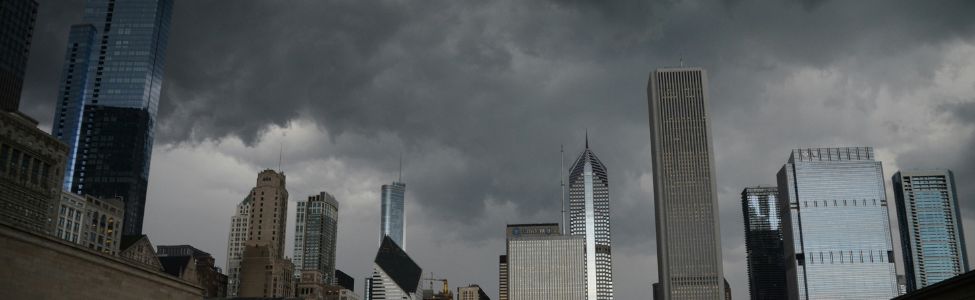
CHICAGO: For parts of Chicago's south suburbs, Tuesday's severe weather brought an unsettling repeat of a scene residents experienced just two weeks ago.
The National Weather Service has confirmed at least five tornadoes touched down across southern Cook and Will counties on Aug. 11, bringing destructive winds, downed trees, damaged homes and widespread power outages to communities including Flossmoor, Mokena, Monee and Crete. That number is up from an initial count of three, as damage assessments continued into Wednesday. Survey teams were still working to confirm additional possible tornadoes near Homer Glen, Tinley Park, Crete and Manhattan, meaning the total could rise further.
One tornado traveled through eastern Will County near Monee and Crete, where surveyors found damage consistent with an EF-1 tornado. A second moved through southern Cook County near Oak Forest and Flossmoor, with damage consistent with at least EF-1 strength. A third was confirmed in the Mokena area, also producing EF-1 damage. EF-1 tornadoes carry estimated winds between 86 and 110 mph.
A separate, large rain-wrapped tornado tracked through Flossmoor, Homewood, Thornton and Glenwood before crossing into northwest Indiana. Local meteorologists and radar data suggested that tornado may have reached EF-2 strength, based on wind speeds picked up by Doppler radar, though it was difficult to see due to heavy rain. Final ratings from the National Weather Service are still pending.
The tornadoes were embedded within a larger, fast-moving storm system that produced damaging straight-line winds throughout the Chicago region. A 99 mph wind gust was recorded in Gary, Indiana, while gusts reached 91 mph in Mokena, according to storm reports. In Tinley Park, the Credit Union 1 Amphitheater sustained damage to its pavilion roof and grounds, and multiple homes near 183rd Street and Oak Park Avenue lost portions of their roofs. Downed trees were also reported within Chicago's city limits, including in the Irving Park neighborhood, where a large tree fell on several vehicles.
In Flossmoor, village officials reported flooded roads, downed trees and blocked streets following the storm. Emergency crews spent Tuesday clearing roadways and assessing damage, while Village Hall opened its board room Wednesday as a cooling and charging center for residents without power. Officials warned residents to stay away from downed power lines and limit unnecessary travel while cleanup continued.
Homewood and Lansing also reported trees falling onto homes and vehicles, while Homewood-Flossmoor High School announced its campus would be closed Wednesday because of storm damage and power outages. Hundreds of thousands of customers across the Chicago area and Northwest Indiana lost electricity during the broader storm system. Across the state line, a home in Portage, Indiana caught fire and was destroyed after being struck by wind gusts estimated near 99 mph.
The damage comes only 15 days after another destructive storm swept through many of the same communities. On July 27, the National Weather Service confirmed seven tornadoes across its Chicago forecast area. An EF-1 tornado moved through Country Club Hills, Hazel Crest, Markham, Harvey, East Hazel Crest and Homewood. Another EF-1 traveled through Lynwood and Lansing before continuing into Munster, Indiana. Southern Cook and eastern Will counties also experienced straight-line wind gusts between 80 and 105 mph during that outbreak.
Tuesday's tornadoes add to what has already become a historic year for severe weather in Illinois. Preliminary National Weather Service figures show the state had recorded 198 tornadoes as of Aug. 11 surpassing the previous single-year record of 142, set in 2024.
The threat has not fully passed. A severe thunderstorm watch was issued Wednesday for Joliet, Kankakee and DeKalb, with forecasters warning some areas could see wind gusts up to 70 mph, though conditions were not expected to match Tuesday's intensity.
For residents still clearing branches and repairing damage from July, Tuesday's storms restarted the cleanup almost before the last one had ended. National Weather Service crews were expected to continue surveying additional areas in the days ahead as communities across the south suburbs assessed the latest damage.