

Richard Boykin is running for Congress in Illinois’ 7th Congressional District, a seat that stretches from downtown Chicago through much of the city’s West Side and into nearby suburbs. It is a district he knows not only as a resident and public servant, but from inside the very congressional office he is now seeking to lead.
Boykin previously served as chief of staff and legislative director to U.S. Rep. Danny K. Davis from 1997 to 2006. Nearly two decades later, he is running to succeed Davis, carrying with him firsthand knowledge of how the office functions and what the role demands.
“When you serve as chief of staff, you are seeing the full scope of what that office does,” Boykin said. “You are responsible for making sure the office runs smoothly, that legislative priorities are moving forward, and that constituents are being served every single day. You learn very quickly that this work is about responsibility, not recognition.”
That experience is one of several shaping Boykin’s case to voters. A former Cook County commissioner, attorney and longtime community advocate, he is positioning himself as a candidate whose preparation for Congress began long before this campaign.
Before Richard Boykin ever worked in a congressional office or held elected office, his understanding of service was shaped much closer to home. He speaks about his upbringing not with nostalgia, but as an explanation for how he came to see leadership as responsibility rather than status.
“I grew up understanding that you were supposed to give back,” Boykin said. “That was not something people talked about in abstract terms. It was something you lived every day, in your family, in your church and in your community.”
Boykin described a childhood shaped by structure and expectation, where education, faith and accountability were emphasized early. Those influences, he said, taught him to view opportunity as something that carried obligation with it.
“My parents believed that if you were given something—whether it was education, opportunity or talent—you had a responsibility to use it in a way that helped other people,” he said. “That idea stayed with me.”
Family, faith and community were not separate spheres, he explained, but interconnected ones that reinforced the same values.
“Church was not just about Sunday,” Boykin said. “It was about how you treated people during the week, how you showed up when someone needed help and how you carried yourself even when nobody was watching.”
Those lessons, he said, shaped both his temperament and his approach to public life.
“I was taught to listen before speaking and to understand before acting,” Boykin said. “That may not always be the loudest approach, but it is the one that lasts.”
Boykin often returns to his years as chief of staff because, he said, the role offered a comprehensive view of congressional leadership. From staffing decisions to legislative planning to constituent services, the job required precision and patience.
“When you are chief of staff, you are not looking at one issue at a time,” Boykin said. “You are responsible for the entire operation. You are making sure the office functions, that the staff is supported and that constituents are being helped in a way that is timely and respectful.”
The experience made clear, he said, how closely Washington decisions are tied to local realities.
“You see how policy decisions made in Congress show up back home,” Boykin said. “You see it when someone walks into the office needing help with housing, when a family is dealing with health care issues, or when a small business owner is trying to navigate federal programs. Those moments stay with you.”
That perspective reinforced, he said, the importance of preparation and institutional knowledge.
“That job teaches you that you cannot afford to guess,” Boykin said. “You have to know the process, understand the policy and be accountable, because people depend on that office to help them navigate government.”
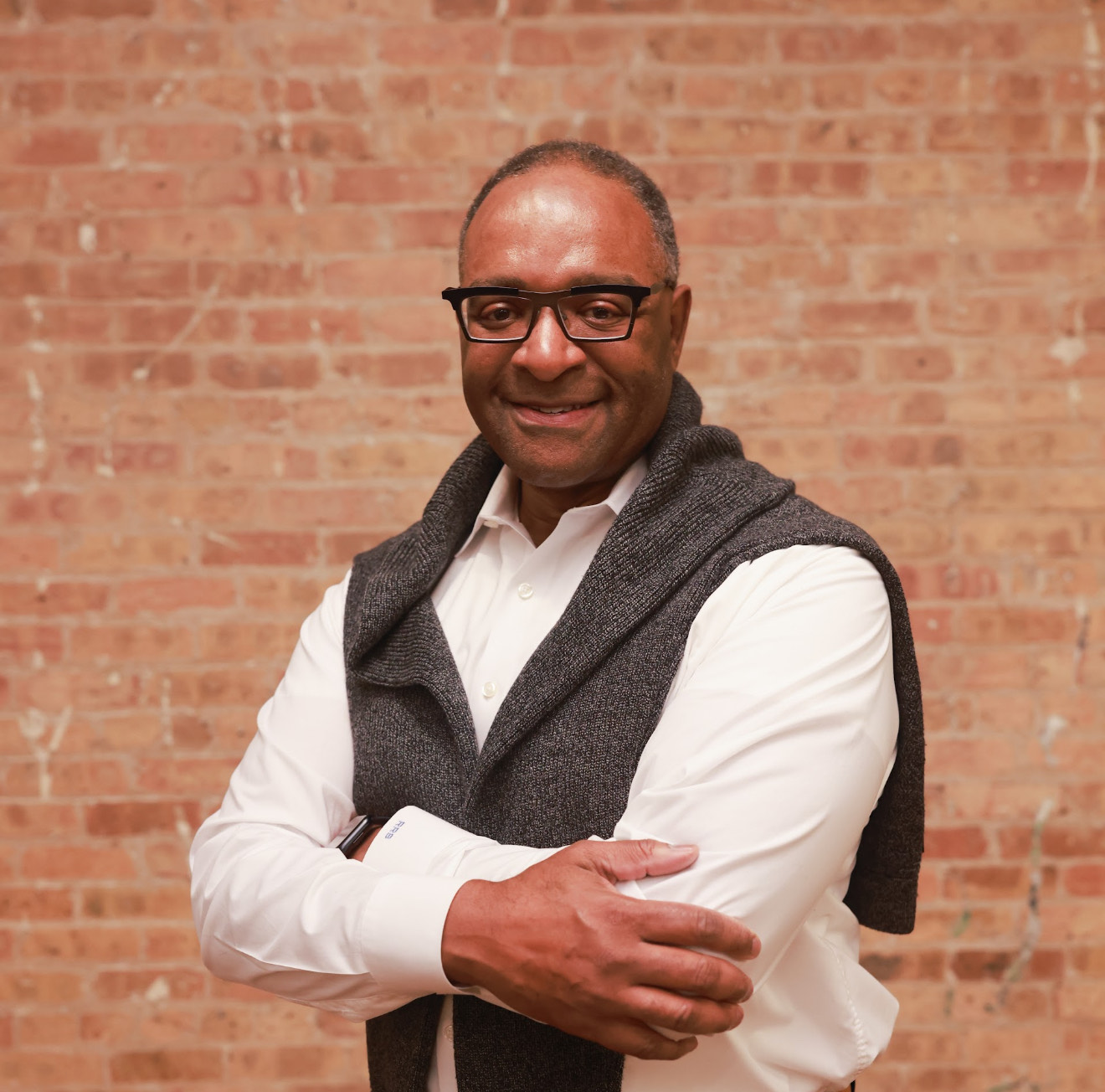
Boykin speaks about Davis with respect and gratitude, acknowledging the opportunity he had to learn under his leadership. At the same time, he is clear-eyed about the fact that Davis has not endorsed him in the race.
“I have a great deal of respect for Congressman Davis and for his years of service,” Boykin said. “Working for him gave me a deep understanding of what this office requires.”
While he did not receive Davis’ endorsement, Boykin said his focus remains on the work ahead.
“This race is not about any one person’s endorsement,” he said. “It is about whether you are prepared to serve and whether you understand the responsibility that comes with the office.”
“When Richard Boykin served with me on the Cook County Board, he was one of my strongest allies. He helped remove properties from the tax sale list, worked to secure exemptions for people who needed them, and played a role in ending the soda tax. We need that kind of leadership in Washington.”
— Maria Pappas, Cook County Treasurer
Boykin’s experience at the federal level was later reinforced by his time in county government. He was elected to the Cook County Board of Commissioners in 2014, representing the 1st District, which includes parts of Chicago’s West Side and nearby suburbs. He served in that role until 2018.
As a commissioner, Boykin was involved in budget deliberations, legislative oversight and policy decisions affecting residents across Cook County.
“When you are sitting at the table making budget decisions, you understand very quickly that leadership is not theoretical,” Boykin said. “You are deciding how resources are allocated, what programs are funded and how services are delivered.”
He emphasized the weight of that responsibility.
“You do not get to experiment with people’s lives,” Boykin said. “Once a decision is made, people live with it. That is why preparation and accountability matter so much.”
Boykin often speaks about faith as a grounding force, but he frames it less as belief and more as responsibility.
“My faith taught me stewardship,” he said. “Leadership is about taking care of something that does not belong to you. It belongs to the people, and you are responsible for handling it with care.”
That sense of responsibility, he said, extends beyond belief into action.
“When people place their trust in you, that trust has to be honored,” Boykin said. “It means showing up prepared, listening carefully and being accountable for the results of your decisions.”
Community, he added, is not a slogan.
“People want to know that you see them,” Boykin said. “They want to know that their concerns matter and that you are willing to do the work to address them.”
Boykin repeatedly returns to the issue of public safety, framing violence not only as a policy failure but as a moral one. He speaks about gun violence as something that erodes the principles of community, responsibility and care for others that he says first shaped him through faith and family.
“When violence becomes normal, something is deeply wrong,” Boykin said. “It means we have stopped protecting life the way we are supposed to.”
Rather than offering sound bites, Boykin speaks deliberately about prevention, accountability and the obligation of government to intervene before tragedy occurs. That perspective is reflected in a detailed eight-point public safety strategy he has released as part of his campaign.
The plan focuses on reducing gun violence through a combination of enforcement, prevention and community-based intervention. It calls for expanded federal prosecution of gun crimes, stronger protections for victims and witnesses, and greater coordination among law enforcement, schools and mental health professionals to identify warning signs before violence occurs.
Boykin’s platform also emphasizes the role of technology and regulation, including firearm safety features designed to prevent unauthorized use, as well as efforts to limit access to guns for individuals at high risk of harming themselves or others. Community violence-interruption programs, which have shown success in reducing shootings in high-risk neighborhoods, are another central component of the strategy.
While the plan is policy-driven, Boykin frames the issue in human terms. He speaks about young people lost to violence, families left behind and communities forced to absorb repeated trauma.
“We cannot accept this as the cost of doing nothing,” Boykin said. “Government has a responsibility to protect life, and that means acting with intention, not indifference.”
For Boykin, addressing gun violence is not simply one issue among many, but a test of leadership itself. He argues that public safety is foundational to peace, prosperity and opportunity, and that without it, communities cannot thrive.
“This is about choosing to protect people,” he said. “It is about deciding that life matters, and then building policies that reflect that belief.”
Boykin approaches the race with a clear understanding of its dynamics. He does not present himself as the front-runner, nor does he minimize the competitiveness of the field.
“I did not get into this race for attention,” he said. “I got into it because I believe experience still matters and preparation still matters.”
Rather than focusing on momentum, Boykin said he wants voters to consider readiness.
“I want people to look at who understands the job, who understands the responsibility and who is prepared to do the work,” he said.
Throughout his conversations, Boykin consistently emphasizes collaboration.
“No one gets everything they want in government,” he said. “But everyone deserves to be represented, and everyone deserves to have their voice heard.”
Trust, he added, is built through listening and consistency.
“That is how progress happens,” Boykin said. “You build trust by showing up, by listening and by being honest about what can and cannot be done.”
As he looks toward the future, Boykin frames the race as a continuation of public service.
“This is about doing the job the right way,” he said. “It is about integrity, preparation and respect for the people you serve.”
For Boykin, the seat he is seeking is not unfamiliar ground.
“I understand what that office requires,” he said. “I understand the responsibility, and I am prepared to carry it forward.”
In a political environment often driven by volume and visibility, Richard Boykin is making a quieter case. He is asking voters in Illinois’ 7th Congressional District to consider experience, trust and readiness—and to weigh the value of steady leadership in uncertain times.