
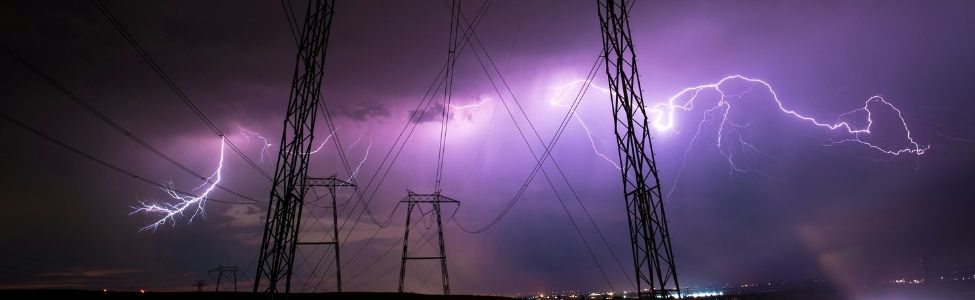
GARY, Ind. For the first time in two weeks, Dasia Blackmon slept last night with her air conditioner running. She wasn't the only one celebrating. Northern Indiana Public Service Company, the region's dominant electric utility better known as NIPSCO, said Tuesday it had restored power to 99% of customers affected by the Aug. 11 storm and subsequent severe weather after recording roughly 374,500 outages since the event began.
But as the lights come back on across this majority-Black city of roughly 67,000 people, a new fight is just getting started over who's to blame for how long it took and whether Gary's prolonged outages exposed deeper problems in the way the utility prepares for and responds to disasters.
Indiana Gov. Mike Braun this week directed the state's consumer advocate to formally petition for an investigation into NIPSCO's handling of the storm, including its preparation beforehand, its response afterward and its management of trees and vegetation near utility infrastructure. The move followed mounting frustration as NIPSCO repeatedly revised its restoration outlook. The utility initially projected that 90% of affected customers systemwide would have power restored by Aug. 18 and that customers who could safely be restored would be back online by Aug. 21. Gary was later given a new target of Aug. 25 as crews confronted extensive infrastructure damage.
The storm produced a 99 mph wind gust at Gary/Chicago International Airport, putting it within the wind range associated with a Category 2 hurricane. According to NIPSCO, roughly 300 utility poles and 44 transmission poles required repair or replacement in Gary alone. Residents and local leaders, however, say the length of the outage exposed something beyond storm damage: a pattern of neglect in a city where roughly a third of residents live below the poverty line.
Gary City Council President Linda Barnes-Caldwell described neighbors on her block glaring at her in disbelief when her own power returned while homes across the street remained dark. Community members organized their own relief efforts in the meantime, delivering ice and dry ice to elderly residents who needed to keep medication cold and turning sites such as Gary's City Life Center into hubs for food, charging and other assistance.
The outage also drew national attention from civil rights advocates. Bernice King, daughter of the Rev. Martin Luther King Jr., argued publicly that the crisis in Gary reflected a broader pattern in which Black communities are too often expected to endure conditions that would generate greater urgency elsewhere. The ACLU of Indiana echoed those concerns, calling for disaster relief that reaches every community quickly and equitably.
Questions of Maintenance and Accountability
NIPSCO has pushed back on criticism that Gary was overlooked, saying crews were assigned to outages of every size throughout its service territory and that the extent of the damage required the rebuilding of portions of the electric system rather than routine restoration work.
The company is also facing a lawsuit. A Porter County resident has filed a negligence claim in state court seeking class-action status, accusing NIPSCO of failing to properly manage trees and vegetation near its power lines. The lawsuit argues that inadequate maintenance contributed to the scale and duration of the outages. NIPSCO has said it strongly disagrees with the allegations and will vigorously defend itself.
Separately, vegetation management falls under the oversight of the Indiana Utility Regulatory Commission, and Braun has asked the commission to examine NIPSCO's practices as part of a broader review of the company's storm preparation and response. Gary and Portage were among the communities appearing latest on NIPSCO's published restoration schedule as crews worked through the most heavily damaged areas.
And Gary wasn't the only majority-Black community confronting prolonged outages. After separate storms struck Memphis and Shelby County, Tennessee, roughly 34,000 customers served by Memphis Light, Gas and Water were still without electricity late Monday. About 140,000 customers had lost service at the height of the storm.
The similarities were difficult for some residents and advocates to ignore: another predominantly Black city, another major storm and another prolonged period in which thousands of people were left trying to navigate extreme summer conditions without electricity.
Federal support is now reaching Indiana, though direct FEMA assistance to homeowners and renters has not yet been approved. President Donald Trump approved an emergency declaration allowing FEMA to provide direct assistance to state and local response efforts. Braun has separately sought a broader major disaster declaration, which could make additional assistance available if approved.
Eligible SNAP recipients in Lake and Porter counties who lost food because of the storms have until Aug. 31 to request replacement benefits through the Indiana Family and Social Services Administration. FEMA and Indiana emergency officials also completed joint preliminary damage assessments Aug. 21 as the state continued documenting losses associated with the storm.
What comes next is less certain. The investigation into NIPSCO has no publicly announced timetable, and it remains unclear whether it will lead to new requirements governing vegetation management, infrastructure investment or outage response.
For Gary residents, those questions extend beyond what happened Aug. 11. The larger concern is what will be different when the next major storm arrives, and whether the vulnerabilities exposed over these two weeks will still be there waiting with it.