
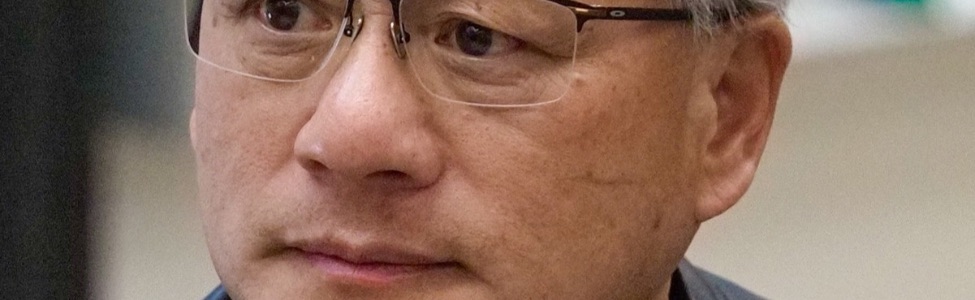
On Oct. 29, The New York Times reported that U.S. officials had concluded a Chinese businesswoman close to Nvidia CEO Jensen Huang was a Chinese intelligence asset. Nvidia spokesperson John Rizzo answered for the company. "Jensen's interactions with Ms. Huang are not unusual or unexpected," he said. "Meetings with customers are part of a CEO's job; Jensen talks with thousands of customer executives every year."
Ten days later, on Sunday, Nov. 8, Huang emailed his employees. "I was unfaithful to my wife," he wrote. "My actions hurt her and our children. There is no excuse for what I did. I am deeply sorry." The same day, Nvidia's board announced that a committee of independent directors, working with outside counsel, would investigate. The board said it had "no reason to believe that either national security or NVIDIA secrets were compromised."
The woman is Alice Huang, also known as Huang Le, a Chinese citizen and former top executive at Megaspeed, a Singapore-based data center company. According to The Wall Street Journal, she went from journalism to finance, then met Nvidia's chief as a Megaspeed executive. CBS News reported she had been a television reporter in China. Trade records cited by the Times show that a Megaspeed sister company in Malaysia bought at least $4.8 billion in equipment containing Nvidia chips between June 2024 and February 2026. The Commerce Department has investigated Megaspeed since late 2024, when an official visiting its Malaysian data center found Nvidia equipment still packed in boxes. The case has since gone to the Justice Department. The Times reported that President Donald Trump was briefed on Alice Huang roughly a year ago and chose not to act, and that Jensen Huang never received a defensive briefing. The Chinese Embassy called the reporting "groundless smears and slanders."
In his email, Huang also wrote, "I love our country and our company," and closed with, "My family bears no responsibility for my choices. I do. Please give them privacy." Dan Ives, a technology analyst who has long followed Nvidia, called the episode a "black eye" and said there is "clearly risk that Jensen could be removed as CEO depending on the Board investigation."
"In the global game of espionage, seduction is one of the oldest tricks in the book," Samantha Vinograd, CBS News' national security contributor, told the network. Targets, she said, are often lonely or posted far from family. During the Cold War, East Germany's foreign intelligence service sent male agents, called "Romeo spies" in the West, to court secretaries in Bonn's government offices. In 2020, Axios reported that a suspected Chinese operative known as Fang Fang had "engaged in sexual or romantic relationships with at least two mayors of Midwestern cities." In January 2025, the State Department barred its personnel in China from romantic or sexual relationships with Chinese citizens. A 1987 department memo on the same subject had assured staff that "the Department does not wish to intrude into the private lives of its employees." China's Ministry of State Security warns in the other direction. In September 2024, it cautioned Chinese students with access to sensitive information against "handsome men" and "beautiful women."
In 2024, a Chicago-area man who asked Fox 32 Chicago to identify him as Grant Trust met a woman calling herself "Kay" on Facebook Dating. They talked every day and spoke over FaceTime. She was not real. Over several months, she steered him into a cryptocurrency trading app, and he lost $70,000, including a $40,000 loan. When he asked why she was scamming people, she wrote back, "Because you are stupid."
"The funny part is that I used to think that I was smart enough not to get into it," he said. Illinois residents reported $17.8 million in romance scam losses to the FBI in 2022 and $19 million in 2023, according to an analysis of the bureau's Internet Crime Complaint Center data.
Eric O'Neill, a former FBI undercover operative who now tracks romance scammers, told Fox 32 that "we all suffer from a psychology called confirmation bias." The board's investigation has no announced end date.