
Chicago has never needed anyone to teach it how to love football.
It is there beneath the Friday night lights, where high school rivalries have spent generations turning teenagers into neighborhood names. It lives in the arguments that spill out of barbershops and bars on Sundays, in Bears loyalties inherited like family recipes, and in a city perfectly willing to spend an entire winter debating who should be under center next fall.
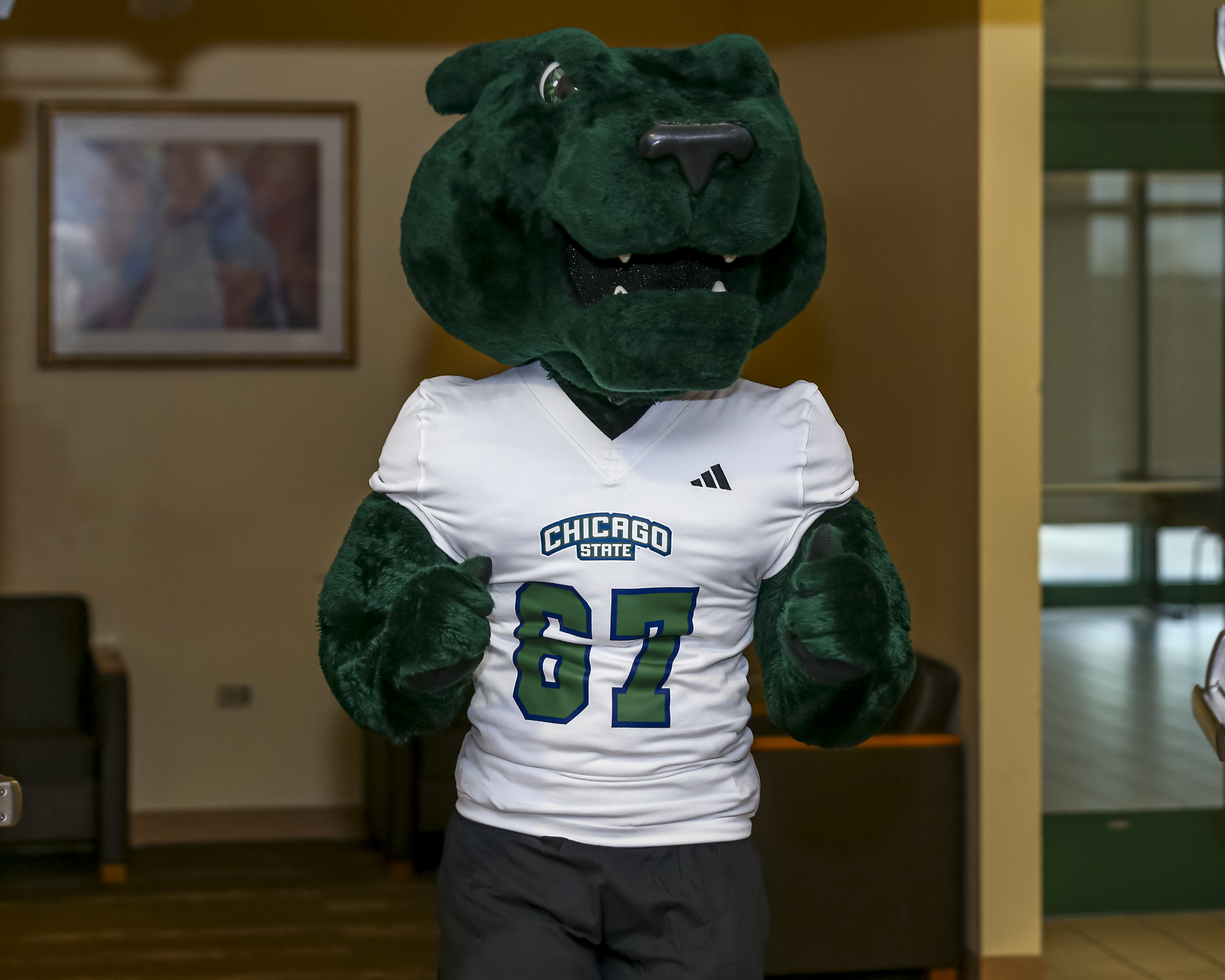
What Chicago has not had for generations is an NCAA Division I football program based at a university within the city itself. The historical trail leads back to 1939, when the University of Chicago played its final football season as a member of the Big Ten before President Robert Maynard Hutchins abolished the program. The Maroons had once been among the giants of college football, winning seven Big Ten championships and producing Jay Berwanger, the first recipient of the trophy that would become the Heisman. Eighty-seven years later, another Chicago university is stepping into that opening.
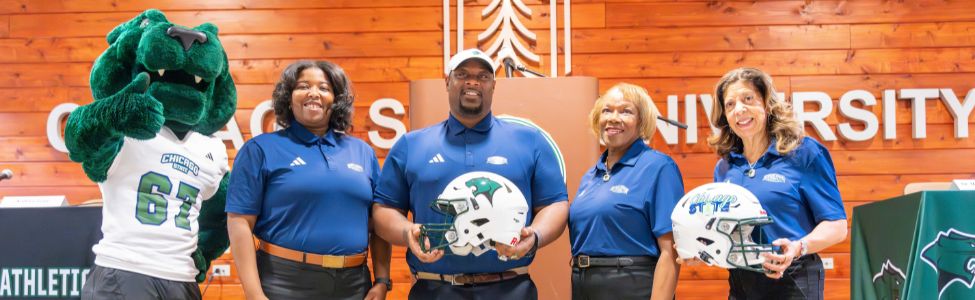
At Chicago State University, near 95th Street and King Drive, a roster of young men is preparing to do something no Cougar before them has done. On Aug. 29, Chicago State will play the first football game in university history and become the only NCAA Division I FCS football program based in the City of Chicago. The Cougars will compete as an independent during their inaugural season before beginning Northeast Conference football play in 2027. That it is happening on Chicago's South Side, at Illinois' only four-year federally designated Predominantly Black Institution, gives the moment significance beyond another addition to a college athletics schedule. Chicago State is betting that football can draw new students, bring alumni back, create a Saturday destination for families and give the wider city another reason to pay attention to the university. Before the tailgating and the soulful trumpetry of the Marching Soul of Chicago, let’s learn how CSU got here. That work began with Dr. Monique Carroll.
Carroll arrived at Chicago State in 2022 with more than 14 years in college athletics and experience on both sides of the sideline. She competed in volleyball, track and field and bowling at the University of Arkansas at Pine Bluff before continuing in track and field at Langston University, where she set school records in the high jump, triple jump and heptathlon. Her career then moved into the less visible side of college sports: compliance, fundraising, sponsorships, ticketing, operations and budgets. Carroll spent nine years at Prairie View A&M University, where her tenure included the opening of a 15,000-seat football stadium and a year in which Panther athletics generated more than $17.8 million in revenue. She later worked at South Carolina State and became athletic director at Huston-Tillotson University, where she increased fundraising and expanded corporate partnerships.
She knew what football looked like from the stands, but more importantly for Chicago State, she knew what it looked like on a spreadsheet. Carroll also credits Chicago State President Zaldwaynaka “Z” Scott with giving her room to lead. “She gave me the keys to the athletic department,” Carroll said. “Every now and then she's in the front seat with me, but typically she sits back and lets me do what I need to do and lead the program the way I want to lead.” That trust mattered because football was not simply an athletic department decision. It required presidential support, board approval, fundraising and an understanding that adding one sport could affect an entire university. Almost immediately after Carroll arrived, Chicago State began examining whether its athletic offerings should grow. Football quickly entered the conversation.
“It was almost the day I walked in the door,” Carroll said.
What followed were years of projections, feasibility studies and conversations about staffing, facilities and sustainability. Carroll described the internal analysis she worked from as 186 pages, weighing the risks and opportunities of launching football. “It never wavered,” she said. “Even with the cons and the challenges we knew we would have to overcome, it was always the pros column.” There was one line Carroll and university leadership did not want to cross. Starting football could not simply mean sending the bill to Chicago State students.
“You don't want to tax the students,” Carroll said. “You don't want to make it a burden on the university. So we fundraised for the entire startup cost of the program.” Donor support ultimately covered approximately $4 million in startup costs, following roughly two years of fundraising.The price tag makes sense when considering what an established program already owns. Chicago State had no football equipment room, no stockpile of helmets and no existing infrastructure waiting to be reused. It also had never moved, housed, fed and supported a football roster. Before Chicago State could play football, it had to become a football school. And Carroll still needed a coach.
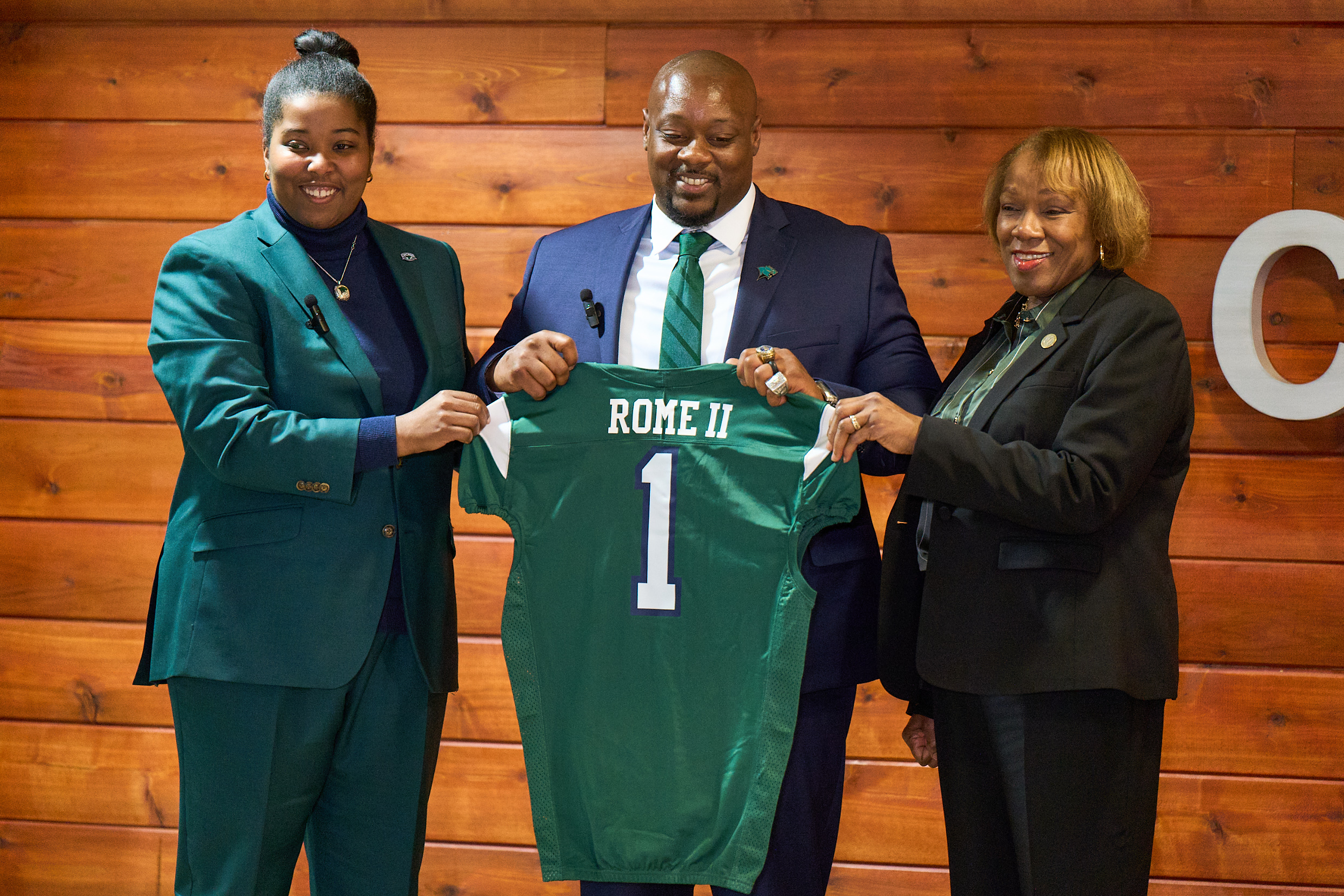
There is a certain appeal to coaching a program with no predecessor, no old offensive philosophy and no fan base comparing you to the person who came before you. There is also no returning quarterback, no depth chart and no senior class to set the standard. At Chicago State, there wasn't even an old jersey. The coaching search attracted hundreds of applicants from professional, college and high school football. Bobby Rome II kept rising to the top. Carroll remembers how the search committee felt after his first interview.“We left that first interview feeling like we wanted to suit up that day and play football.”
Rome's résumé fit the assignment. At Florida Memorial University, he took a program that had struggled to win in conference play to consecutive appearances in the Sun Conference championship game. Earlier coaching stops had already earned him a reputation as someone comfortable with programs still defining themselves. His understanding of football was also shaped by an unusual playing career. Rome arrived at the University of North Carolina as a quarterback before moving to fullback. The shift required him to see the game from a completely different angle, though he says his father had prepared him for that long before college.
“The first thing my father taught me in football was to learn every position on the field,” Rome said. “Learn what they do and why they're important.”
As a quarterback, Rome had to understand where everyone was supposed to be. When he moved into the backfield, he already understood the timing, motions and responsibilities developing around him. After college, he spent time in professional football before the sport eventually took him overseas and into coaching. That ability to see the whole field would become useful at Chicago State, where his assignment was not to repair a football culture but create one. Carroll and Rome eventually spent almost a full day together reviewing the university's football plan. By the end of the search, Chicago State had its inaugural head coach.
Rome talks about coaching as a ministry and a calling, language that makes more sense when he talks about his father. A Norfolk State graduate, his father had worked as a graduate assistant in baseball and once hoped to coach at the college level. Family responsibilities ultimately took him in another professional direction, but he never stopped coaching his son.
“My father is a big influence on me and my life,” Rome said. “Even now, as a 40-year-old man, he's still raising me.”
Now Rome is asking another group of young men to take on something unfamiliar. Established programs can sell recruits on history. Coaches point to championship banners, famous alumni, rivalry games and generations of players who wore the uniform before them. Chicago State could offer something different: the chance to decide what that history would eventually become.
Rome needed players willing to accept the imperfections of being first, commit to Chicago State and establish standards future players could inherit. For him, those standards include far more than what happens at practice. He talks about where his players sit in class, how they train and how they represent the university. “Everything we do is going to be important,” Rome said. “We're going to do it with a championship mindset.”
College football has changed dramatically since Rome played it. Athletes now navigate the transfer portal, NIL opportunities and far more freedom of movement. Rome acknowledges that reality, but says part of coaching is still teaching young men how to commit to something larger than themselves. “Anybody can go out there and organize these guys to play football,” Rome said. “But getting these young men prepared for the next phase of life, which I think they'll be in longer than they'll be here at Chicago State, is the most important thing.” He is equally clear about another responsibility. Winning.
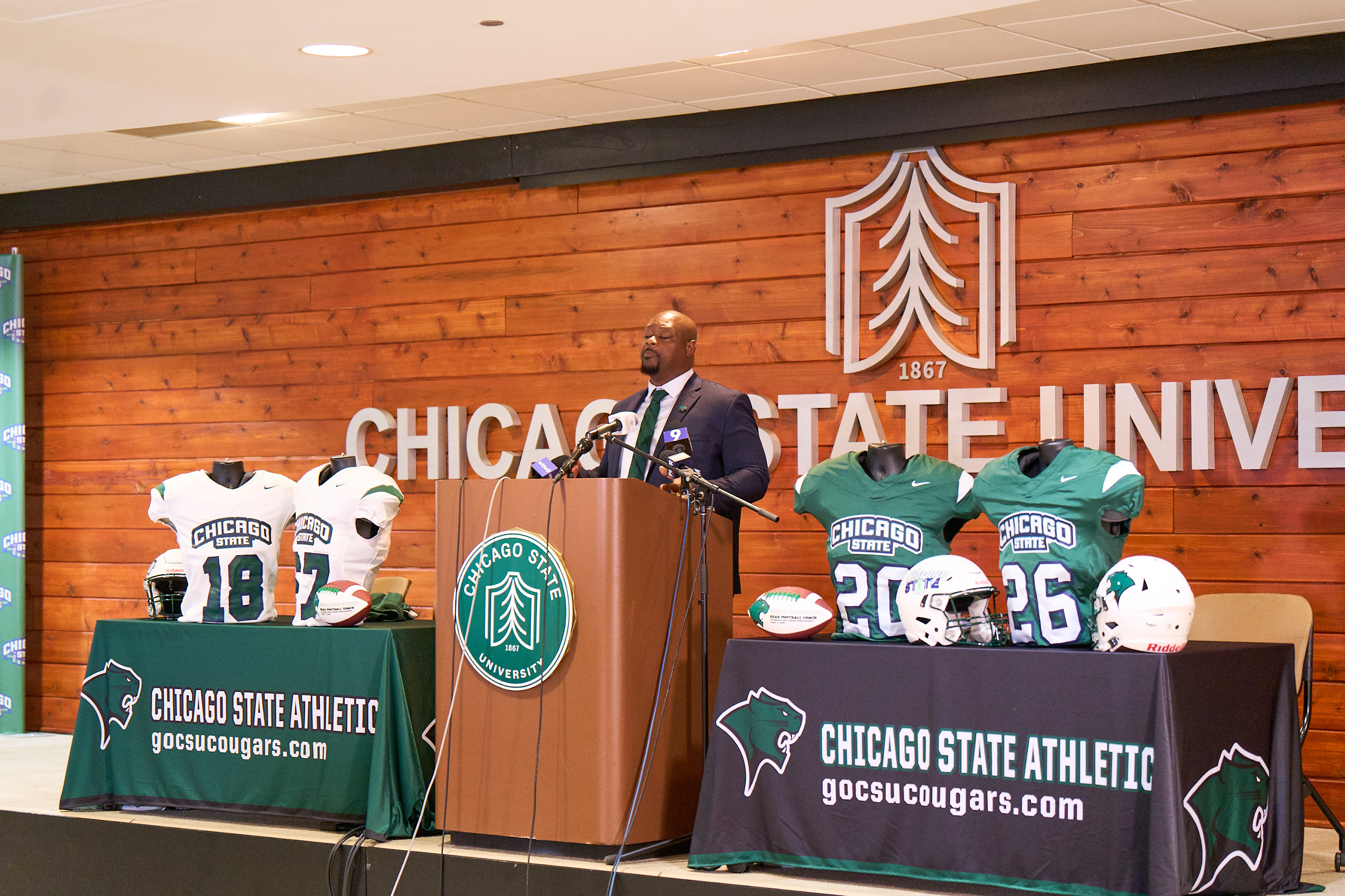
There is a familiar vocabulary available to coaches taking over first-year programs. They can talk about progress, development and patience while asking everyone to look beyond the record. So I gave Rome the opportunity.
Imagine the season is over, I told him. Forget the wins and losses for a moment. What would make Year One successful? He rejected the premise almost immediately.
“I care about the wins and losses.” Then he went further. “Chicago is not a city for losers.”
Rome believes the players he recruited can compete now, not simply after several recruiting classes have matured. “We didn't recruit one young man who can't come out there and compete at that level,” he said. “We know exactly what we signed up for.” He even joked that if the Bears showed up, the Cougars would line up and play them. Fortunately, the Bears are not on the schedule.
Carroll approaches the question of Year One differently. She wants to win, but her assessment will also include something Rome does not have to measure on the scoreboard: what the university learns from doing this for the first time. “We definitely want to win, but I think when we sit down and say, ‘OK, the first season is over,’ we'll really ask, ‘What did we learn?’” Carroll said. “What did we learn about ourselves, about the university, about the team?” For Carroll, those answers will help determine what comes next. “Football is year-round,” she said. “So we'll take some time, and then we'll go right back at it for next year.” It was, as I told her in the moment, the athletic director answer.
One of the most revealing lessons of building a football program is how quickly football stops being solely an athletics project. Rome pointed to something fans probably never consider: the cafeteria. More than 100 football players require food, housing, admissions support, training, equipment and transportation. The change reaches across campus. “It's not just the football players and the football team that's new to football,” Rome said. “It's the entire institution.”
Carroll sees the difference most clearly in scale. Before football, men's soccer was Chicago State's largest team, with roughly 30 to 35 players. A football travel party can approach or exceed 100 people, requiring multiple itineraries, more equipment and even charter flights. “You can't break it into pieces,” Carroll said. “You have to move a team.” The change is visible even in the student population. Carroll said Chicago State's campus is roughly 70 percent female, making the arrival of more than 100 football players a noticeable demographic shift. Football is not simply being added to Chicago State. It is changing the daily rhythm of the university.
Carroll already knows what she wants Saturdays to feel like. Not an imitation of somebody else's college football experience. A Chicago State one.
“If you've ever experienced Black college football,” she said, “that's what we are.”
The Marching Soul of Chicago will be there. Carroll envisions families, food and football, with a game-day atmosphere reflecting the identity of a predominantly Black university on Chicago's South Side.
“We're going to bring the Black college football experience to our fans,” Carroll said. “The atmosphere we're going to create is going to be one for family, family fun and football.”
Chicago State will have to earn that audience. This is a city with nearly endless competition for a Saturday afternoon, from professional sports and concerts to festivals and neighborhood events. The inaugural home game against Roosevelt University will be played Aug. 29 at SeatGeek Stadium in Bridgeview. Carroll wants those five home dates to become destinations and believes one good Saturday can create a returning fan.
“This is our time,” Carroll said. “We're not going to pass the moment by. We're not going to let anybody else pass it by. We're going to sit in it.” Soon, the studies, fundraising meetings, and recruiting pitches will fade into the background. The band will play. Families will arrive in Chicago State gear. And players who have spent months preparing for something their university has never experienced will finally take the field. Carroll believes they'll give Chicago a reason to return. Can Chicago State build not just a team, but a football culture?
There is something unusual about entering a season with no previous season against which to measure it. No Cougar holds a passing record. There is no longest field goal or famous fourth-quarter comeback. There is no senior class telling freshmen what wearing a Chicago State football jersey is supposed to mean. Those things are waiting to be created. Carroll wants the university to appreciate that moment rather than hurry through it.
Rome is more direct about what happens when that moment reaches the field. “I'm here to develop young men, but I'm also here to win football games.” That combination of possibility and expectation may best explain what Chicago State is attempting. In 1939, one Chicago university decided major-college football no longer belonged in its future. Eighty-seven years later, another is making a very different decision about what the game can mean to an institution and the city around it.
This time, the story begins on the South Side. It begins with President Zaldwaynaka Scott supporting the vision, Carroll spending years determining whether it could work, Rome accepting the challenge of creating a team without inherited traditions and a group of young men willing to become the answer whenever somebody asks who played football at Chicago State first.
“If you come on the 29th, we'll have a good experience,” she said. “And you'll come back to see us.” Rome's promise is simpler.
“August 29, our young men will be ready,” he said. “They'll be ready when we put toe to football.” After nearly four years of planning, millions raised, hundreds of coaching applicants and generations without a Division I football program based inside Chicago city limits, there is only one thing left to do.