

In Chicago, where sound has always been tied to identity, lineage and resistance, Femdot, born Femi Adigun, exists in a space that refuses to be reduced to any one lane. He is as comfortable in front of a classroom at DePaul University as he is in the middle of a packed room, where fans jump, collide and lose themselves in the moment. He jokes that he is too old for the mosh pit now, but the fact that it exists at his shows anyway says plenty about how people experience his music and curated events.
What stands out in person is not the scale of what he has built, but the way he carries it. He is kind, measured and present, the type of presence that does not compete for attention, but still holds it. It would be easy to misread if you did not know what sits behind it: the rooms, the crowds, the work, the way people respond when the music starts.
When I ask how he defines himself, whether he sees himself as a rapper, a lyricist, an artist or something else entirely, he does not treat rapper like a limitation.
No one calls a poet a dirty word. No one calls a novelist a dirty word. I'm a writer and it's just that my medium is rapping. I'm very much a rapper Im a writer first, and my medium is rap.
In Chicago, that matters. It places him in conversation with artists who approach rap as something to be studied, built upon and taken seriously. The comparison to someone like Lupe Fiasco is not about sounding alike. It is about approach, about intellectualizing the art form while still being able to move a room.
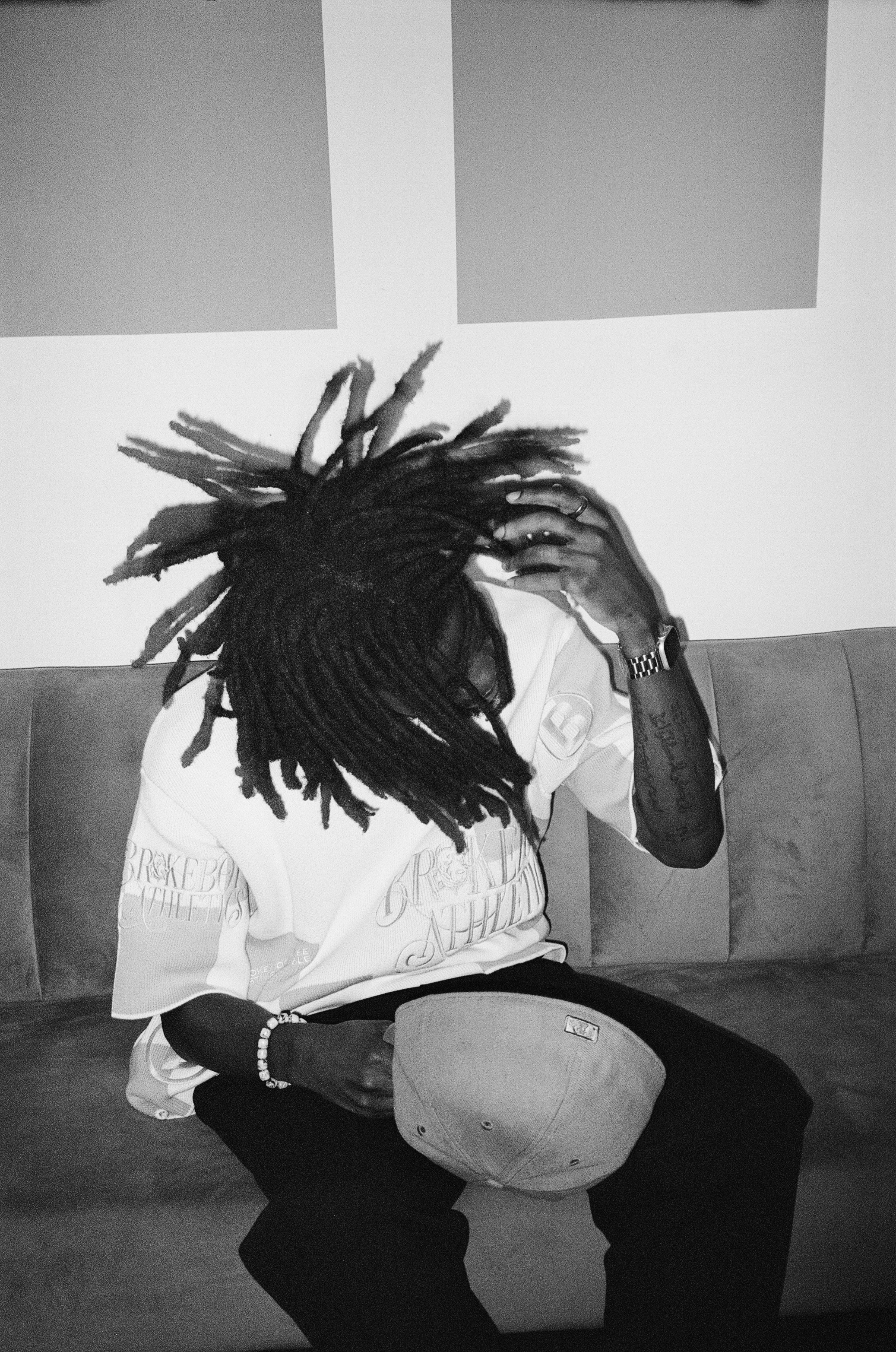
The Foundation
Early in the conversation, before we get into the full weight of the music, I tell him directly that he comes from what feels like a superhero family. The more we talk, the more that framing holds. Femi Adigun grew up in a Black, first-generation American Nigerian household where excellence was visible, layered and expected in different forms. Discipline was present, but so was range.
Music did not arrive later. It was already there. He recorded his first song at 6 years old, a Family Focus track called What You Wanna Be, and by grammar school he was passing out mixtapes and recording at home.
His brother, Kola Adigun, became the first blueprint, not just introducing him to rap, but shaping how he listened to it and studied it. Kola stepped away from rapping at the end of high school to focus on school, but the relationship to music never left. In adulthood, he returned to the craft through songwriting, landing credits connected to major artists and records, including work tied to Eminem, G Herbo, Offset, Rubi Rose, Honey Dijon, Bree Runway, Flo Milli, Maiya The Don and Mello Buckzz.
My brother's always gonna be my favorite rapper. He also introduced me to all of the rap that I enjoy Im really just a combination of my siblings it was kind of like passing the torch, although I was mad young.
That combination of my siblings line is one of the most important things he says about himself. Femi does not position his story as self-made in the empty, mythological sense. He understands himself as a product of proximity, family, study and inheritance.
That level of excellence was not limited to music. His sister, Seun Adigun, is a two-time Olympian and a doctor, the first African athlete to compete in both the Summer and Winter Olympics. In the transcript, the family résumé starts to sound almost unreal: two-time Olympian, five degrees, doctor, history-maker, sister.
It's four of us and everyone else is competing for second place she's gotta win we're all competing for second place for real.
That environment shapes expectation, but it also shapes perspective. When I ask about the pressures associated with being first generation American, he does not romanticize it. He talks about discipline, survival and the way practicality can sometimes limit dreaming. But he also makes clear that his parents left room for creativity.
Especially being of Nigerian descent, theres a lot of discipline that shows up when people come here from different countries, a lot of times survival is the only mindset but my parents, they were open as long as we were doing what we needed to do. They let a lot of our hobbies continue.
The conversation then turns toward the perceived divide between first-generation African kids and African American-born Black communities, a question rooted in how people experience Chicago and how Blackness gets understood, separated, flattened or expanded depending on where you stand.
I've only ever been raised to see Black as the umbrella that we all fit under growing up in Black American culture fully and interacting with Jamaicans, Haitians, Belizeans everybody has a variation of this thing that ties into each other I understand how rare it is to be able to exist as who you are. So its also allowed me to be able to see Blackness as a larger identity and understand the variations, but what it is as a whole for real.
It is a nuanced answer to a real tension, and it explains a lot about how he moves. There is no denial of difference, but there is also no distance in how he defines belonging.
The Mind
When we shift into process, the tone changes. Less about origin, more about how he thinks in real time. Femi is a thinker, and that is not always a peaceful thing. In the second conversation, I bring up "For The Overthinkers" on his latest EP, Less Talk More Haze because the title alone suggests something is happening beneath the surface.
He describes pacing at home, trying to plan everything, imagining every possible outcome, until he had to interrupt himself. "If you could just imagine my anxiety or my overthinking in physical form, I"m just walking in circles and I just stopped and I thought, bro, just make something."
That is the part that sticks: Just make something. Sometimes the planning becomes the thing blocking the work. That tension is all over his creative process: intentional, but not paralyzed; thoughtful, but not frozen.
When I ask why he raps and why he chooses the lane he does, the answer is practical and self-aware. He knows what feels natural and what does not.
My music just reflects who I am I have moments where Ill pop it, thats cool, but thats just not sustainable for me. It feels unnatural Let me go find some chamomile tea. Let me process. Let me get back in my head a little bit.
There is humor in it, but there is clarity too. He can access that braggadocious mode, but it is not where he lives. The center of his work is reflection, documentation, observation and feeling. As I grew older, it went from me just enjoying words to it being journal entries, to then being like, oh, Im supposed to be a documentarian giving you insight to how people are thinking or to whats going on presenting you with the idea of what humanity looks like.
Even the way he talks about his earliest connection to music reflects that attention. When I ask about the first rap record that changed his life, he does not hesitate: Jay-Z's Dead Presidents II. He remembers seeing the video in his brothers room, the static on the screen, his brothers glued to the TV and, later, Kola burning him a copy of Reasonable Doubt. The genre was imprinted on him thereafter.
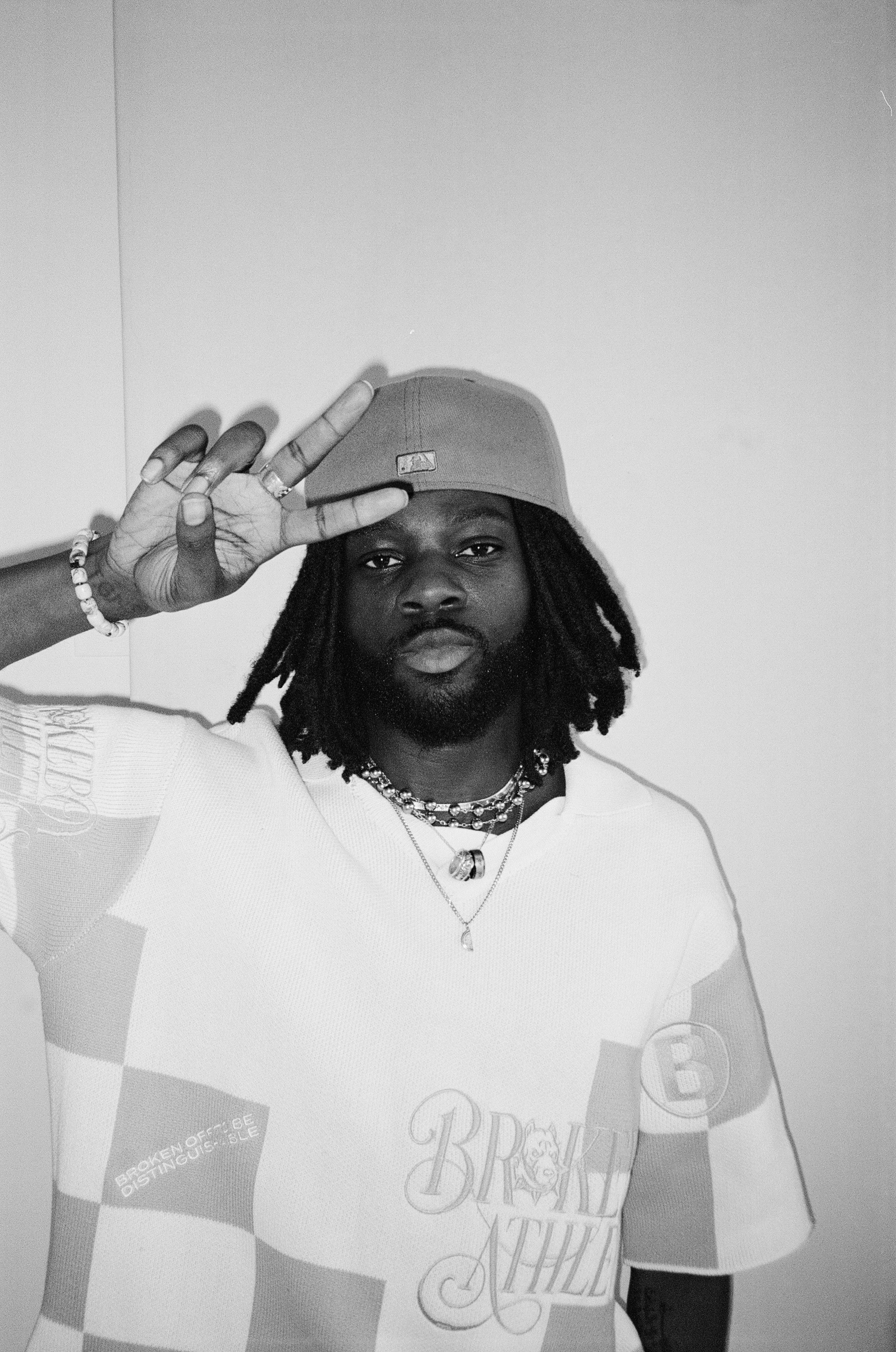
The Work
As his career develops, the work shifts from trying to translate himself clearly to trusting himself fully. When I ask if he makes music for himself or for people to hear him, he gives an answer that sounds like someone who has learned how unpredictable audience response can be.
When I was younger, I was making music that I felt was good and that would convey my points across for other people to understand but now I make music that I like I prepare the food and they either eat it or they don't. Thats it.
He continues with the lesson that experience taught him: people often do not know what they want until they hear it in the right context.
People dont know what they want, and the only thing they want is authenticity, so Im just gonna make music that feels good to me.
The same philosophy shows up in how he thinks about projects, especially EPs. He calls them time capsules, smaller bodies of work meant to capture a moment, a feeling or a small pocket of a larger idea. His day-to-day life shows up because he makes music for the places where he actually listens to music: the shower, the house, while cleaning, inside ordinary motion.
He does not talk about projects like product drops. He talks about them like containers, small enough to hold a feeling, but large enough to point toward a bigger idea.
The City
What becomes clear as the conversation moves forward is that his work does not stop at the music. It extends into how he understands Chicago itself, not just as a place, but as a system. The same way he approaches rap as something to be studied, he applies that thinking to the city, to how it is built and who it serves. When we start talking about his work at DePaul University, it shifts the conversation completely. He is not just teaching music. He is teaching how to read a city through it.
I'm teaching a course called Chicago Culture Through Hip Hop. It pretty much uses hip hop as an anthropological lens into the way the city is developed. So I have first-year students, and they have to learn about Chicago, and they learn through the lens of what I teach them, which is strictly Chicago hip hop albums.
He is not using hip hop as decoration for a syllabus. The albums are the texts. They are the way into neighborhood history, political decisions, displacement, violence, resistance and memory.
Hip hop is a narrative-based art form, and its a Black art. When you have a city thats segregated like Chicago by blocks, each block has a different narrative, and if people are rapping about it, you get an actual insight into whats going on. If were talking about school closings, redlining, food deserts, then you take that and you see why somebody from this neighborhood is rapping the way they are. Theres a direct connection to how the policy of Chicago has affected the people who live in these communities.
And when the conversation turns to drill, he places it inside the same framework.
Drill is a very, very good indicator of Chicago policy people don't connect those dots and then they just want to blame whether you agree with the content or not doesn't mean that its not a reflection of whats going on.
That is the difference between consuming a genre and understanding what created it.
The Ecosystem
When we get into You Had to Be There, it is easy to focus on the turnout, the energy and the fact that people showed up the way they did. But what stood out to me was not only the room. It was what happened after. He shouted out every DJ, every contributor, Ramova, the people who helped make the experience work. I tell him directly that this is not always how people move, especially in entertainment, where credit can be treated like currency people are afraid to spend. His response is immediate.
Because they're good at it This is an ecosystem we're building, right? You're supposed to follow the DJs in Chicago. Thats what you do. Follow the DJs. That doesnt take anything away from me.
When I ask why he decided to create the event, he makes it clear that the intention was bigger than one night. Chicago DJs are doing important work. Chicago artists are doing important work. But, as he sees it, those worlds do not always cross over. His goal was to activate an independent Chicago venue, show proof of concept and use what he has built to put his friends in position. The next You Had to Be There continues that thinking. In the second conversation, he explains that the June 6 event is back at Ramova, still rooted in DJs and performance, but this time curated with an all-women lineup.
That continuation matters because it shows the first event was not a fluke. It was proof of concept. Now the concept is expanding.
The Ethos
Toward the end of the second conversation, I shift the question. Less about what he has done, more about what he believes. I ask him to imagine that he is shouting into the void, except this time it is not a void. Everyone is listening. Everyone has his ear. What is the thing he wants people to know? He pauses. Then answers.
Two things. All this shit is made up. And every path is different. I think were always trying to follow these rules and learn this way or this is the way to get there, and its like, no the fuck, no its not actually. None of that is. Theres no, no. I have to constantly remind myself that. I think my career is an example of that. Were worried about the parking spot, not the vehicle. You have an assigned parking spot, but theres no telling if youre gonna take 94, youre gonna take Lake Shore, youre gonna be in a rental car, youre gonna be in your whip, youre gonna be on a bike. Theres no telling how youre gonna get there, but you have an assigned parking spot. So your path may look different, but youre gonna get to where you need to go, whatever that is, and it may not be what you think it is. But everyones path is different, and all of this shit is made up. The beauty of that is because all this shits made up, you can make up some shit too.
It does not land like advice. It lands like clarity. Like someone who has already wrestled with the pressure of trying to follow a map that did not quite exist for him.
And when you look back at everything else, the family, the heritage, the records, the classroom, the packed rooms, the DJs, the city, it fits. Nothing about Femi Adigun feels accidental. The quiet does not mean small. The humility does not mean uncertainty. The kindness does not mean lack of force.
He is not just making music. He is building around it. Bar by bar.
If you're not locked into Femdot, be sure to follow and support him on all platforms right now, but start with the music.