
Come writers and critics
Who prophesize with your pen
And keep your eyes wide
The chance won’t come again…
— “The Times They Are A-Changin’,” Bob Dylan
The above excerpt was written in 1963, when American society — and much of the world — was undergoing profound transition and change. People in the United States were deeply divided on many issues: the fight for civil rights, women’s liberation, the Vietnam War and the assassination of President John F. Kennedy, along with a host of other social reckonings unfolding simultaneously. Dylan believed that “the chance to keep your eyes wide” would not come again.
Whether the perils of the 1960s outweigh the struggles of today is open to debate. What is not debatable is the enduring responsibility and power of the pen, the keystroke and the lens, which have not wavered in their importance. From details transcribed on cave walls to stories etched into ancient ruins, humanity has always documented its experience. That record is vital for society to recognize its errors, its triumphs and its inefficiencies. We learn through the act of reporting.
On January 18, 2026, a protest disrupted an active worship service at a church in St. Paul, Minnesota. Demonstrators entered the sanctuary during the service to oppose federal immigration enforcement, citing the belief that one of the church’s pastors, David Easterwood, also served in a senior leadership role with Immigration and Customs Enforcement (ICE). Chanting and verbal disruptions interrupted the service, which church leaders later described as an intrusion into a private religious gathering.
According to reporting and publicly available video from the event, Easterwood was not present at the worship service that day. Another church leader can be seen engaging with protesters and congregants during the disruption.
Journalists, including Don Lemon and Georgia Fort, were present to document the protest and its aftermath. Neither journalist was arrested at the scene. Coverage of the disruption circulated widely in the days that followed, drawing national attention to the protest and its underlying claims.
In the immediate aftermath, state and local authorities did not pursue criminal charges related to the service disruption, such as trespass or disorderly conduct. Instead, in the weeks that followed, the U.S. Department of Justice opened a federal investigation. Prosecutors ultimately brought federal charges alleging that participants in the protest violated civil rights statutes by interfering with worshippers’ constitutional rights. The charges relied on laws intended to protect access to religious institutions, representing a significant escalation beyond typical local protest enforcement.
Days later, following the unsealing of federal charges, Lemon and Fort were arrested at locations separate from the church. Other individuals connected to the protest were also charged. All defendants known publicly at the time of reporting were released without monetary bail pending further court proceedings. As of early February 9, 2026, the cases remain active, with no final rulings issued and trial dates not yet publicly set.
Attorney General Pam Bondi publicly framed the federal action as necessary to protect constitutional rights, particularly the right to worship without interference, stating that under the current administration “you have the right to worship freely and safely” and that violations of federal law would be prosecuted.
What followed raised not only legal questions, but professional ones — particularly for journalists covering protests at the intersection of private space and constitutional rights.
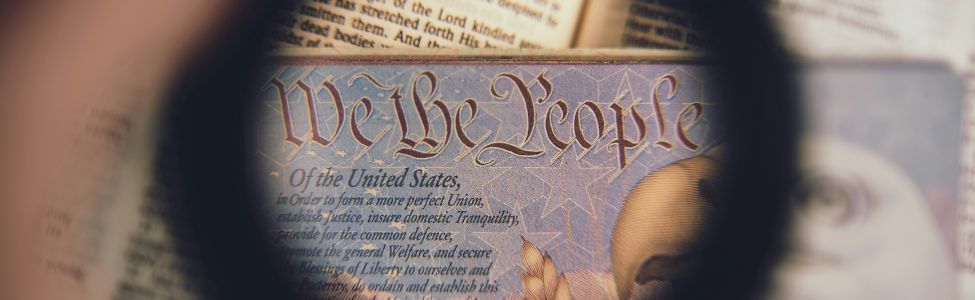
At the center of the Jan. 18 arrests is the First Amendment to the United States Constitution, which protects multiple rights that converge and at times conflict in this case.
The First Amendment states:
“Congress shall make no law respecting an establishment of religion, or prohibiting the free exercise thereof; or abridging the freedom of speech, or of the press, or the right of the people peaceably to assemble, and to petition the Government for a redress of grievances.”
This single sentence contains five distinct protections: religion, including establishment and free exercise; speech; press; assembly; and petition. Courts are often required to evaluate how these rights interact when they intersect.
The Free Exercise Clause protects the right of individuals to practice religion without government interference. Courts have consistently recognized worship services as a core expression of religious exercise. As a result, federal and state laws permit action to prevent substantial interference with religious worship, and houses of worship receive heightened constitutional protection.
While the First Amendment also protects speech and peaceful assembly, those protections are not unlimited as to place or manner. Courts distinguish between public forums, such as streets and sidewalks, where speech protections are strongest, and private property, where owners retain the right to control access and conduct.
A church sanctuary, even when open to the public for worship, is considered private property under constitutional law and is not treated as a public forum.
Robert Johnson, an attorney specializing in corporate and social enterprise law, offered this perspective: “Freedom of speech, press and assembly are fundamental freedoms of our democracy. They are so elemental that the framers made them the very first amendment. It is very broad in its interpretation, and courts have historically been very liberal in defining what is protected. Now, it is being weaponized to try to quell dissent.”
The First Amendment does not expressly grant a right to enter or disrupt a private religious service, even for political protest.
Freedom of the press protects journalists from government censorship or retaliation based on viewpoint. However, courts have repeatedly held that journalistic privileges do not extend beyond the rights of the general public. Press protections apply to newsgathering, but they do not exempt journalists from neutral laws of general applicability.
When multiple First Amendment protections are activated simultaneously, including press freedom, peaceful assembly and religious exercise, courts are often left to determine how those rights are balanced under the law and how enforcement decisions align with constitutional limits.
The arrests connected to the January 18 protest prompted renewed scrutiny of how journalists can safely and lawfully cover demonstrations, particularly when protests occur inside or near private spaces such as houses of worship.
Press freedom advocates note that safety in these situations is not limited to physical risk. Legal exposure often turns on observable conduct rather than intent, and on how clearly a journalist’s actions can be distinguished from participation in a protest.
Courts generally evaluate journalist arrests by examining conduct and context rather than professional identity. Journalists engaged in clearly recognizable newsgathering activities, such as observing events, recording what occurs and avoiding participation in demonstrations, have often received greater First Amendment consideration during judicial review.
Religious spaces raise additional constitutional considerations. Worship services are recognized as core expressions of religious exercise, and houses of worship receive heightened protection. Journalists do not gain additional access rights inside religious spaces, and press freedom does not override congregants’ rights to worship without interference.
Press freedom organizations emphasize that responsibility for journalist safety does not rest solely with individuals in the field. Newsrooms and media organizations increasingly recognize the importance of preparation, legal guidance and institutional support when assigning protest coverage.
This framework does not determine guilt or innocence in any specific case. Rather, it reflects how courts typically evaluate journalist conduct when protest activity intersects with private property and protected religious exercise.
For journalists, the arrests connected to the January 18 church protest did not register as an isolated enforcement action. They landed as a warning.
The severity of the federal charges — brought under civil rights statutes rather than local protest laws — immediately set the case apart. Journalists noted that such statutes are rarely used in protest coverage and even more rarely applied to members of the press. The concern was not limited to whether the arrests would ultimately withstand judicial scrutiny, but what it means when the line between witnessing and participation grows increasingly thin.
In recent years, arrests and prosecutions of journalists have increasingly appeared in international press-freedom reports, often tied to expansive legal theories rather than clear acts of violence or incitement.
Organizations such as the Committee to Protect Journalists have documented cases in which journalists were detained, charged or surveilled based on proximity to protests rather than demonstrable participation. While the United States has long distinguished itself from such practices, journalists responding to the January 18 arrests said the escalation felt jarring — particularly in a media landscape shaped by shrinking budgets, layoffs and growing reliance on freelancers and community reporters.
Taken together, the reactions that followed were not partisan. They were professional.
Kai El’ Zabar, editor in chief of Chicago News Weekly, said, “The arrests signal that journalists must know the laws regarding our rights. Paraphrasing will not substitute for knowledge. When we enter a private space, we need to know that we do so by invitation, otherwise we are trespassing and can be arrested. We need to know our rights, not assume our rights, so that we can do our jobs legitimately.”
“Journalists are not participants in the stories they cover. When witnessing and reporting are treated as criminal behavior, it creates a chilling effect — especially for independent and community reporters who lack institutional protection.”
Sylvia Ewing, vice president of journalism and media engagement at Public Narrative, described her reaction as “disgust and disappointment,” framing the moment as part of a broader erosion of trust between journalists and institutions of power.
“We are at a tipping point around attacks on the First Amendment, and the ongoing demonization of the press hurts everyone.”
She emphasized that journalists have long operated near protest movements as witnesses, not participants.
“The role of journalists is to witness and report facts. When this fundamental responsibility is underappreciated, the ability to make informed decisions is compromised and democracy is undermined.”
Neffer Kerr said the arrests confirmed concerns that have circulated quietly within journalism spaces for years.
“No one on the panel seemed to think the loss of freedom of speech in media and press was a valid threat.”
Two years later, she said, the arrests made those concerns tangible.
“Here in America, many of us have been so accustomed to having this right that we don’t fully grasp what not having it will mean.”
“Journalism is not a crime.”
Brandon Pope, freelance journalist and president of the Chicago chapter of the National Association of Black Journalists, said the arrests raised alarms about how power is exercised — and who bears the greatest risk.
“This is something you typically read about in international headlines from Russia or China, not the United States of America.”
“Freelancers don’t have a legal department. When charges escalate like this, the risk isn’t abstract — it’s personal.”
Seth Stern, chief of advocacy at the Freedom of the Press Foundation, called the arrests a clear attack on press freedom.
“The arrests of Don Lemon and Georgia Fort rely on bogus legal theories to punish constitutionally protected reporting and send a warning to other journalists. The message is unmistakable: the government is looking for ways to target reporters, particularly independent journalists.”
“The answer is not fear or self-censorship, but a stronger commitment to journalism, the truth and the First Amendment.”
The legal questions raised by the January 18 arrests will ultimately be resolved in court. Judges, not commentators, will determine how federal statutes apply, what conduct crossed legal lines and whether the charges withstand scrutiny.
But the broader implications of the case are already being felt beyond the courtroom.
At issue is not only the balance between protest rights and religious freedom, but how journalism functions when it operates in spaces where constitutional protections intersect — and sometimes collide. The case underscores a reality long understood by press attorneys but less often confronted by the public: First Amendment protections are powerful, but they are not absolute, and they are shaped by context, conduct and location.
For protesters, the case reinforces longstanding legal limits on where and how political expression is protected. Courts have consistently distinguished between public forums and private spaces, and religious worship remains among the most strongly protected forms of private constitutional activity.
For journalists, the case highlights how quickly the line between protected newsgathering and legally vulnerable conduct can narrow — particularly in emotionally charged environments involving private property and heightened constitutional interests.
Several journalists described fear not as panic, but as a quiet recalibration — a moment where routine professional judgment begins to include questions of legal exposure, personal risk and institutional support. That shift, they argued, does not require censorship to be effective.
For news organizations, the moment raises questions of responsibility. Training, legal guidance and clear editorial standards are no longer optional safeguards but necessary infrastructure for covering protest movements, particularly when demonstrations intersect with private spaces or protected religious activity.
At a broader level, the case tests how a democracy treats its witnesses.
Journalists do not create the events they document. They do not resolve the conflicts they observe. Their role is to record, contextualize and preserve a public account of what occurred — especially when events are contested, uncomfortable or politically charged.
The concern voiced by journalists following the January 18 arrests is not solely about this case or these defendants. It is about precedent, perception and the cumulative effect of decisions that reshape the boundaries of press freedom without ever formally rewriting the Constitution.
As courts weigh the facts and the law, the larger question remains unresolved: how a society committed to both religious freedom and a free press ensures that neither is protected at the expense of the other — and that neither becomes collateral damage in moments of political conflict.
What happens next will matter not only for those charged, but for how future protests are covered, how journalists assess risk and how the public comes to understand the events unfolding in its name.