

Chicago doesn’t lack talent. It lacks structure.
That belief sits at the core of 24 Life Training & Fitness, founded by David Carson, a former Division I basketball player whose journey into training was shaped as much by loss and recovery as it was by athletics.
Before the gym, before the brand, Carson saw himself as one thing: a basketball player. Raised in Gary, Indiana, an only child close to his parents, basketball became his identity, his discipline, and his way forward. It kept him focused, pushed him academically, and framed how he imagined making an impact—through camps, mentorship, and eventually the NBA.
But life interrupted that plan. Shortly after college, as Carson was preparing to pursue a professional career, he was struck head-on by a driver who intentionally ended her life. The crash left Carson with severe injuries—broken bones, dislocations, and trauma that went far beyond the physical. More than anything, it stripped away the one identity he had always known.
“I wasn’t David Carson the basketball player anymore,” he says. “And that question—who am I without that?—put me in a really dark place.”
Recovery forced stillness. It forced patience. And in that stillness, Carson began to confront something he hadn’t before: what actually brought him joy. The answer wasn’t applause or performance. It was helping people—especially those who didn’t yet see themselves as capable. That realization changed everything.
Carson’s philosophy today is rooted in what he calls the 24 Blueprint—a belief that training isn’t about workouts, aesthetics, or intensity for its own sake. It’s about structure. It’s about principles that hold when motivation fades and life gets hard.
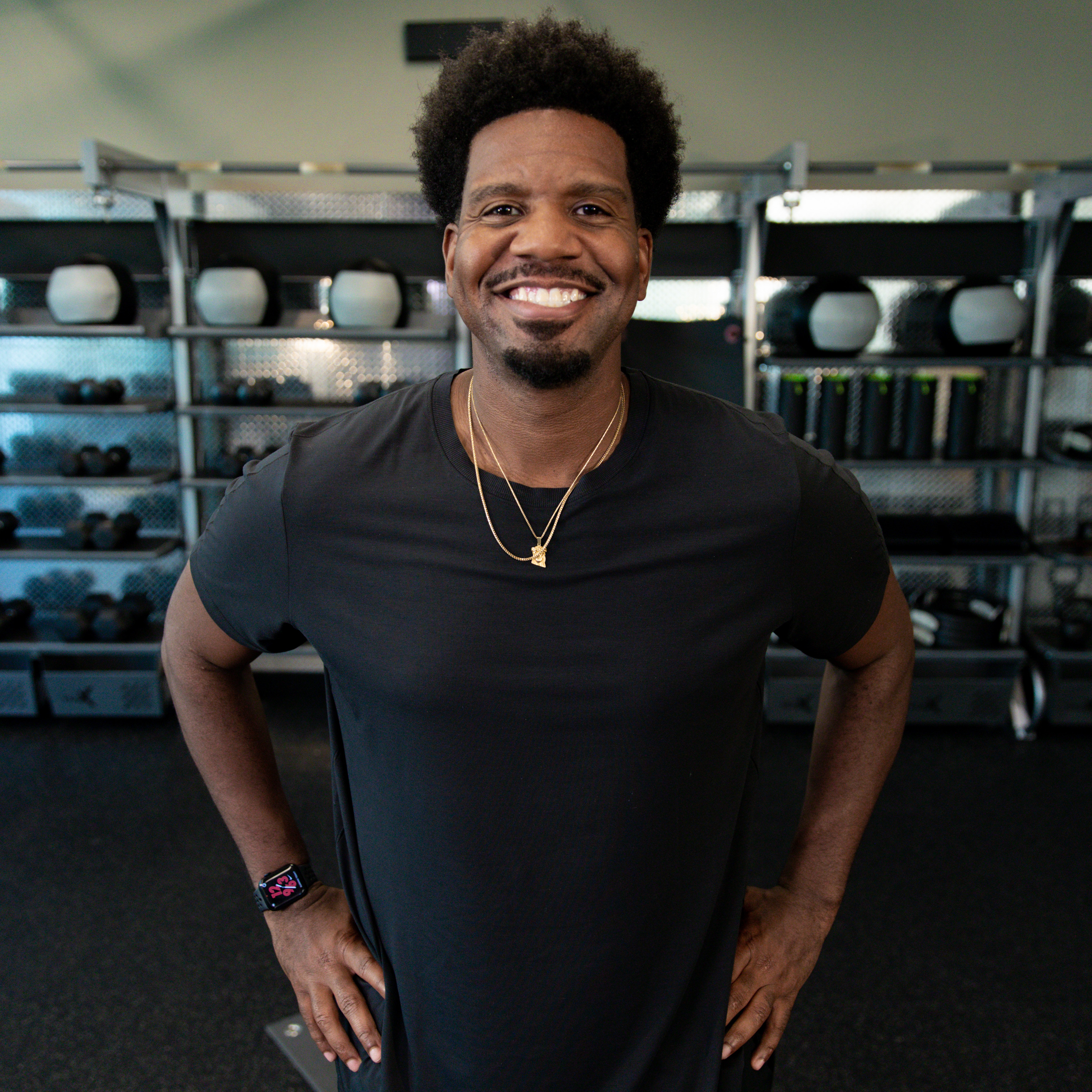
“Every day you’re not going to feel like doing it,” Carson explains. “So when motivation disappears, you fall back on your structure.”
That belief crystalized when he began training his mother, helping her lose over 150 pounds. Unlike elite athletes, she didn’t walk in with built-in confidence or years of conditioning. What worked wasn’t pushing harder—it was teaching why movements mattered, tracking progress, and building consistency. Carson realized the gap between elite athletes and everyday people wasn’t ability—it was clarity and structure.
That same thinking now shapes how he trains youth. Carson is quick to challenge one of the most common mistakes parents make: treating sports as a guaranteed pathway to professional success. “In our community, because there’s so much money in sports, we lose sight of why sports matter,” he says. “They teach discipline, teamwork, leadership—but there are no guarantees.”
He contrasts that with experiences he’s seen in other communities, where youth sports are valued not for scholarships or pro careers, but for character development. In one moment that stuck with him, a parent explained that their child’s training wasn’t about basketball at all—it was about preparing him to one day lead a company.
“That shifted everything for me,” Carson says. “We’re not just raising athletes. We’re raising leaders.”
Environment, he believes, plays a massive role in performance. Many Black children are forced to mature early—taking on adult responsibilities long before they’re ready. Without consistent mentorship and safe spaces, they’re pushed into independence without guidance.
That’s why Carson believes youth development must go beyond sports. Rec centers, mentorship programs, and daily points of engagement matter—not pop-ups, but permanent structures ; places that give young people something to look forward to, something to build toward.
“Hope is powerful,” he says. “When kids can’t see past today, bad decisions feel easier. Training, structure, and mentorship give them a future to prepare for.”
In an era dominated by social media trainers, Carson also draws a clear line between performance and service. While others focus on optics, he emphasizes education, empathy, and experience. “Training is a service industry,” he says. “If I can’t meet you where you are, none of this works.” Legacy, for Carson, has nothing to do with producing professional athletes. It’s about impact—former clients who become business leaders, fathers, and community builders.
“The real goal of training isn’t strength or speed,” he says. “It’s self-discovery.” And for any young athlete reading, his message is simple: you don’t have to have everything figured out. With patience, discipline, and consistency, the world opens up in ways you could never predict.
“I didn’t even know some of these opportunities existed,” Carson says. “I just kept showing up. Everything else followed.”